
This guide outlines key dog facts. It covers canine anatomy, sensory limits, body language, and intelligence. You will learn how dogs see and also how they regulate body heat. Also, you will discover the emotional meaning behind tail movements. Finally, you will understand how canines process human speech and facial expressions.
How do canine senses compare to human senses?
The evolution of canine anatomy reflects millions of years of specialized predator adaptations. For more dog facts, consider that humans depend primarily on vision. However, a dog’s primary sensory window to the world is olfactory, with acute auditory capabilities supporting this.
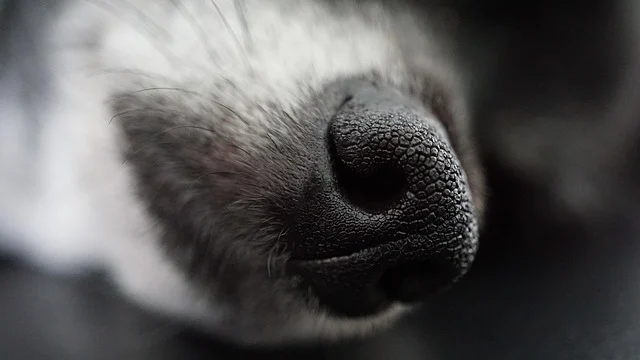
Olfactory processing and the Jacobson’s organ
A dog’s nose holds 125 to 300 million scent receptors. The breed affects this number. Humans have about six million. A dog’s brain area for odors is 40 times larger than a human’s. For more dog facts, see the American Kennel Club. A dog’s smell is 10,000 to 100,000 times more sensitive than ours. They can detect chemical compounds at parts per trillion.
Dogs have a vomeronasal organ, also called Jacobson’s organ. This secondary olfactory system is behind the front incisors. It is on the roof of the mouth. This organ detects pheromones. These chemical signals show biological sex, social status, and reproductive readiness. They also convey emotional state. When a dog curls its lips or licks a scent mark, it opens fluid channels. These pass molecules to this specialized organ. These are some dog facts.
Auditory range and ear movement
Dogs hear sound frequencies from 67 Hz up to 45,000 Hz. However, the average human hearing range caps at roughly 20,000 Hz. This extended upper register allows dogs to pick up small sounds. For example, they hear high-pitched rodent rustling or electronic hums. These sounds remain completely silent to human ears.
Each canine ear has 18 distinct muscles. These muscles allow a dog to rotate, tilt, raise, or flatten each ear independently. As a result, they can pinpoint a sound source. They also detect its precise direction and distance within fractions of a second.
Canine vision and light sensitivity
A common misconception is that dogs see only in black and white. Dogs actually possess dichromatic vision, meaning they have two types of color-detecting cone cells in their retinas. They perceive colors primarily along a blue and yellow spectrum. Reds, greens, and oranges appear as shades of grey, tan, or brownish-yellow.
Dogs see less color but detect motion better. Their retinas have many rod cells. These excel at detecting movement and low-light contrast. A reflective layer, the tapetum lucidum, sits behind the retina. This structure acts like a mirror. It reflects unabsorbed light back through the retina. This doubles light collection in dark environments. It produces the characteristic shining glow in a dog’s eyes at night. These dog facts show how they adapt.
Taste and touch sensitivities
Dogs have about 1,700 taste buds across their tongues. In comparison, humans have roughly 9,000. They can identify sweet, sour, bitter, and salty flavors. However, they also possess specialized water-responsive taste receptors. These are at the tip of the tongue. These receptors intensify when a dog drinks water. This encourages proper hydration, especially after consuming salty meats.
A dog’s tactile sense relies heavily on whiskers, also called vibrissae. These coarse hairs are on the muzzle, above the eyes, and beneath the jaw. They are deeply embedded in sensory follicle tissues. Whiskers pick up subtle air currents. This helps dogs navigate narrow spaces and judge distances in low light.
What physical traits make every dog unique?
Beyond their sensory organs, dogs possess physical characteristics that differ markedly from humans and vary widely across individual animals.
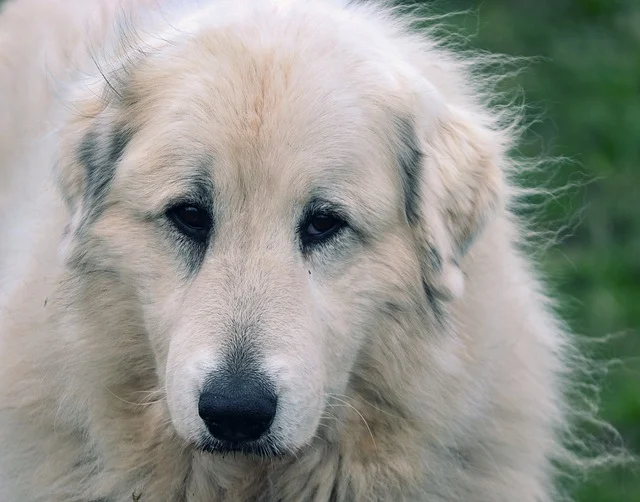
Unique nose prints
Much like human fingerprints, every dog’s nose has an entirely individual pattern of ridges, creases, and pores. No two dogs share the same nose print structure. Veterinary organisations and rescue networks have explored nose-print scanning technology as a non-invasive identification method alongside microchipping.
Thermoregulation through paws and panting
Dogs do not sweat through their skin in the way humans do. Their skin lacks eccrine sweat glands across the torso. Instead, dogs possess merocrine sweat glands located in the pads of their feet. When warm or stressed, a dog leaves moist paw prints on hard surfaces.
Panting serves as the primary cooling mechanism. Dogs rapidly move air across the moist surfaces of the tongue, mouth, and upper respiratory tract. As a result, moisture evaporates. This takes body heat with it. Dogs also regulate temperature by dilating blood vessels in their ears and face. This dissipates excess heat into the air.
The third eyelid
Dogs possess a third eyelid known as the nictitating membrane, located in the inner corner of each eye. This translucent membrane sweeps horizontally across the cornea when the dog blinks or shuts its eyes. It protects the eye from dust and debris, cleans the corneal surface, and houses a specialized gland that produces a significant portion of the eye’s tear film.
How do dogs communicate through body language and sound?
Canine communication relies on a combination of body posture, ear placement, tail movements, vocal signals, and scent deposits. Interpreting these cues in context prevents misunderstandings and improves human-dog relationships.

Decoding tail posture and movement direction
A tail wag does not automatically signify a friendly dog. Tail movement indicates emotional arousal, and the height, speed, and lateral direction of the wag convey different mental states:
- Right-sided wagging: Biomechanical studies reveal that dogs wag their tails more to the right. This happens when they feel positive emotions, for example, approaching an owner. Left-hemisphere brain activity drives this action.
- Left-sided wagging: A dog’s tail may wag to the left. This movement correlates with negative stimuli or hesitation. For example, it happens when dogs meet an unfamiliar or dominant dog. Right-hemisphere brain processing drives this action.
- High, rigid posture: A tail held stiffly upright indicates high alertness, assertiveness, or potential tension.
- Low or tucked tail: A tail tucked firmly against the belly signals fear, submission, or severe stress.
Facial expressions and body tension
Ears held relaxed and slightly forward indicate a neutral, comfortable state. Pinned-back ears indicate fear, apprehension, or defensive signaling. Direct eye contact with a hard, unblinking gaze can represent a threat, while soft eye contact with relaxed facial muscles indicates safety and affection.
According to the ASPCA, you should recognize changes in body language and vocalization. This is vital for addressing stress and preventable behavior challenges early.
Vocal communication spectrum
Dogs use several distinct vocalizations to express intent:
- High-pitched barks: Rapid, high-toned barks typically signal excitement, playfulness, or greeting.
- Low-pitched barks and growls: Deep, sustained vocalizations indicate defensive warnings, territorial guarding, or annoyance.
- Whining and whimpering: Short, high-frequency sounds signify distress, frustration, pain, or an earnest request for attention or resources.
- Howling: Inherited from wolf ancestors, howling serves as long-distance communication to mark location or gather pack members.
What do we know about dog cognition and emotional intelligence?
Research into animal cognition demonstrates that dogs possess rich cognitive lives, capable of complex problem-solving, vocabulary learning, and social empathy.
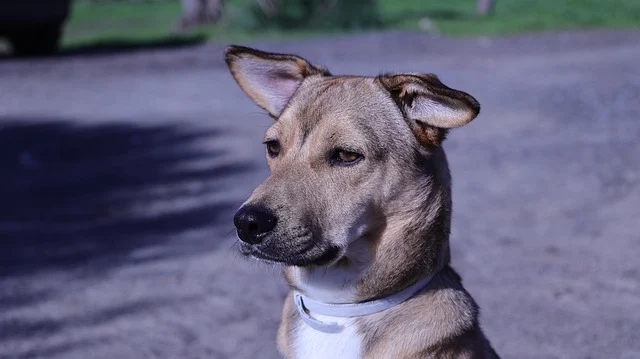
Word comprehension and task learning
The average domestic dog can learn roughly 165 words, signals, and spatial commands. This level is comparable to a two-year-old human child. However, exceptional individuals have demonstrated more ability. Working herding breeds, like Border Collies, can learn and categorize over 1,000 distinct object names.
Dogs do not process human speech language structures like humans do. Instead, they combine pitch, tone, and learned phonetic sounds. This helps them deduce meaning. They process word meanings in their left brain hemisphere. Also, they process vocal tone in the right hemisphere. Both components must match for full command comprehension.
Reading human emotion
Research led by the University of Lincoln’s Centre for Animal Welfare confirms this. Dogs process human facial expressions and tone of voice. They use this to evaluate emotional states. Also, dogs process happy facial expressions differently from angry or fearful expressions. As a result, they often adjust their own behavioral response.
Dogs are among the few animal species that routinely seek out direct eye contact with humans. They do this for communication, reassurance, and cooperative problem-solving. For example, they seek eye contact when faced with an impassable barrier or hidden food puzzle.
Sleep patterns and dreaming
Adult dogs sleep between 12 and 14 hours every 24-hour period, while puppies and senior dogs may sleep up to 18 hours daily. Canine sleep patterns include both Non-REM and Rapid Eye Movement (REM) phases.
During REM sleep, which typically begins 20 minutes into a sleep cycle, a dog’s brainwaves mirror those seen during active waking hours. Dogs experience vivid dreams during this stage, often evidenced by twitching whiskers, paddling paws, soft vocalizations, and rapid eye movement under closed lids. Small dog breeds dream more frequently—sometimes every 10 minutes—while large breeds experience longer dream cycles spaced about 90 minutes apart.
How did dogs become human companions?
The domestic dog (Canis lupus familiaris) was the first animal species humans domesticated. This happened long before agriculture or livestock farming began.

Genetic and archaeological evidence indicates that dogs diverged from an extinct wolf ancestor between 15,000 and 30,000 years ago across Eurasia. Early ancestral wolves that exhibited lower fear responses were attracted to human hunter-gatherer campsites to feed on discarded food waste.
A symbiotic relationship developed over thousands of generations. Early dogs helped humans. They assisted with tracking, protection, and pest control. Humans provided nourishment, shelter, and companionship. This deep co-evolution modified morphology and brain chemistry. It made dogs uniquely attuned to humans. They live closely alongside us, whether working or as a household companion. These dog facts show their unique bond.
How breed selection shapes physical abilities
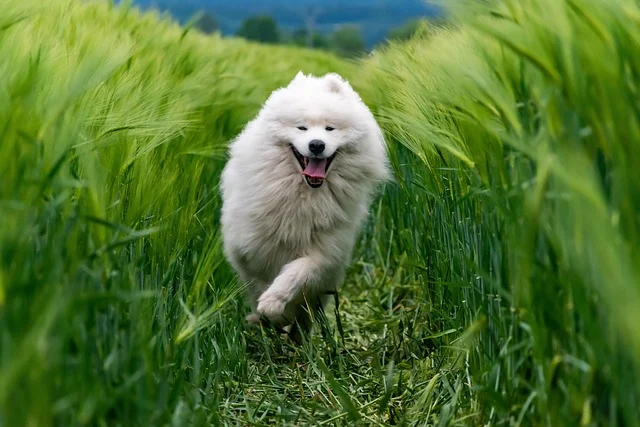
Humans bred dogs for thousands of years. This created over 340 distinct breeds globally. They bred dogs for specialized work roles. This controlled breeding created extreme physical variation. All these dog facts are within a single species. A Chihuahua weighs under two kilograms. An English Mastiff can exceed 90 kilograms.
| Breed Category / Group | Primary Historical Purpose | Key Sensory or Physical Adaptation | Distinctive Behavioral Trait |
|---|---|---|---|
| Herding (e.g. Border Collie) | Livestock management and driving | High visual motion sensitivity and precise spatial control | Strong instinct to control movement and intense focus |
| Scent Hounds (e.g. Bloodhound) | Tracking game and missing individuals | 300 million olfactory receptors and long droopy ears to trap scent | Single-minded persistence when following ground trails |
| Working Breeds (e.g. Siberian Husky) | Sled hauling and arctic transport | Dense double coat and energy-efficient metabolic conditioning | High stamina, group pack cooperation, and loud vocalizing |
| Gundogs (e.g. Labrador Retriever) | Game recovery on land and water | Soft mouth grip reflex and water-repellent double coat | High social cooperation and eagerness to work with humans |
| Toy Breeds (e.g. Chihuahua) | Companionship and alert warnings | High acoustic sensitivity relative to small body mass | Strong loyalty to owners and quick territorial alarm instincts |
Common dog facts myths debunked
Separating verified biology from persistent myths leads to healthier dog care practices.

Myth 1: One dog year equals seven human years
The “7-to-1” aging formula is too simple. It ignores breed size and early development rates. Dogs mature quickly in their first two years. A one-year-old dog equals a 15-year-old human. Small breeds age slower after adulthood than giant breeds. These dog facts show a 10-year-old Toy Poodle is biologically younger than a 10-year-old Great Dane.
Myth 2: A dry nose means a dog is sick
A dog’s nose temperature and wetness fluctuate naturally daily. This depends on humidity, temperature, and activity. Dogs lick their noses to coat them with mucous. This helps capture scent particles. A dry nose after sleep is normal, according to dog facts. Persistent nasal cracking, thick discharge, or skin peeling needs vet evaluation.
Myth 3: Dogs eat grass only when they are sick
While dogs may consume grass to induce vomiting when suffering from digestive discomfort, most dogs eat grass simply as a normal foraging behavior. Fresh grass contains dietary fiber, trace nutrients, and a pleasing texture.
Applying dog facts to daily pet care
Understanding canine biology directly improves day-to-day pet management and routine training decisions.
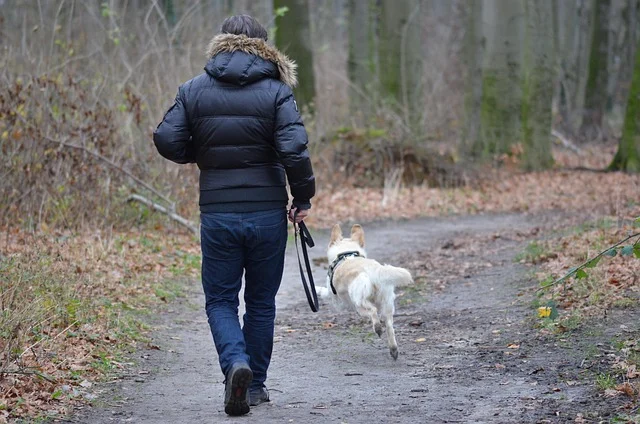
- Engage their nose daily: Provide “sniffari” walks. During these walks, your dog can stop and investigate scents at their own pace. Ten minutes of intensive sniffing provides significant mental stimulation. This tires a dog out as effectively as physical running.
- Adjust to coat requirements: Breeds with dense undercoats require specialized grooming routines to preserve natural temperature control. See American Wirehair Cat: Quirky Coat, Calm Companion for detailed double-coated grooming strategies.
- Use vocal tone intentionally: Reserve low, firm tones for quiet obedience cues, and higher pitches for enthusiastic rewards or recall prompts to align with their natural auditory tendencies.
- Respect clear stress signals: If a dog turns its head away, licks its lips repeatedly, yawns when not tired, or displays the whites of its eyes (whale eye), give them space to decompress.
Frequently asked questions
Can dogs see in total darkness?
Dogs cannot see in absolute darkness, but they see significantly better than humans in low light. Their large pupils, high concentration of retinal rod cells, and reflective tapetum tissue maximize available ambient light reflection.
Why do dogs roll in smelly substances on walks?
Rolling in strong odors is an evolutionary instinct. Ancestral wolves rolled in biological scents to mask their own scent profile when hunting, or to carry scent information back to share with their pack.
Why do dogs curl up in a ball when they sleep?
Curling into a ball protects vulnerable internal organs from potential predators while conserving core body heat in cooler environments.
Do dogs have a sense of time?
Dogs do not measure time in minutes or hours, but they understand elapsed duration using internal circadian rhythms and routine environmental markers. They also evaluate time based on how much an owner’s scent has decayed in the home since departure.