You can successfully integrate your dog into kayaking. First, select the right craft. Outfit your pet with supportive safety gear. Then, build confidence through gradual training steps. This guide details how to choose an appropriate boat. You must evaluate structural design, surface grip, and total payload limits. This ensures it is truly dog-friendly. It also covers essential safety gear. Finally, it considers different dog temperaments and breeds.
Dog Kayaks: How to Choose the Best Kayak for Your Canine Companion
Dog kayaks are stable, wide-beam kayaks. We design or adapt them for paddling with a canine companion. They feature open decks and non-slip surfaces. They also have increased weight capacity. The most reliable choices are durable sit-on-top plastic models. Heavy-duty drop-stitch inflatables are also good. They provide easy boarding. They also resist dog claw scratches. As a result, they maintain high primary stability on the water.

Successfully integrating your dog into kayaking depends on several factors. First, select the right craft. Also, outfit your pet with supportive safety gear. Finally, build confidence through gradual training steps. Understanding hull design, weight distribution, and your dog’s temperament will ensure safe and enjoyable trips.
Can a Dog Go on a Kayak? What Makes a Kayak Dog-Friendly?
Yes, many dogs can safely and happily kayak. However, you must choose the right equipment. You also need to train your dog properly. Not every watercraft can handle a canine passenger. Dogs have shifting weight and sharp claws. You must look beyond color and price. Evaluate structural design and surface grip. Also check total payload limits. This ensures a truly “dog friendly” boat.
Hull Width and Primary Stability
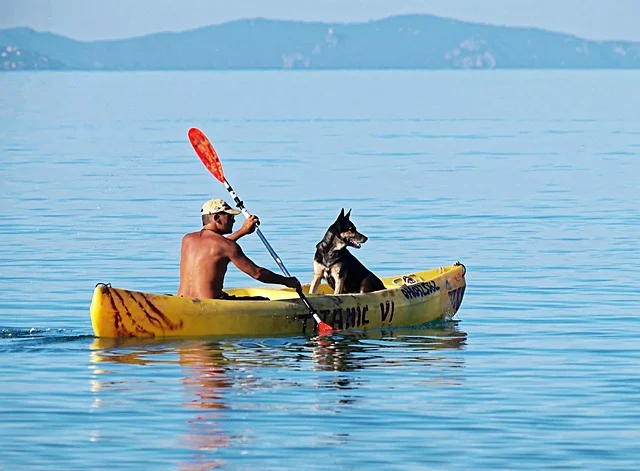
Stability is the single most important factor when selecting a craft for paddling with a dog. For paddling with pets, primary stability (how steady the boat feels when sitting flat on calm water) matters most.
A kayak designed for dogs should have a wide beam. This is typically 30 to 34 inches (76 to 86 cm) or wider. Flat-bottom hulls, cathedral hulls, and pontoon-style (tunnel) designs offer superior initial stability. They are better than narrow, V-shaped hulls built for tracking speed. When a dog suddenly shifts, a wide, flat hull absorbs the weight displacement. As a result, it does not list dangerously.
Deck Design: Sit-on-Top vs. Sit-In Kayaks
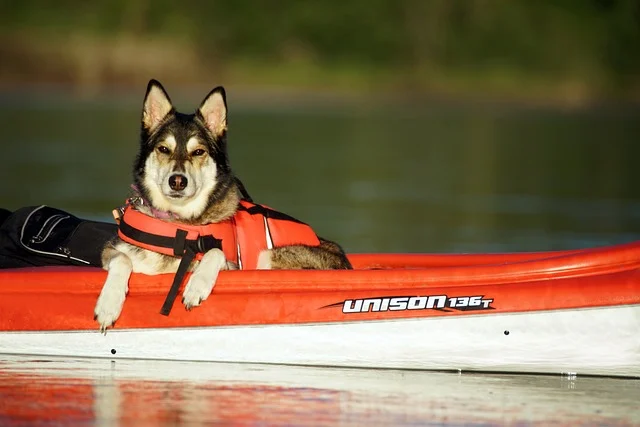
Sit-on-top kayaks are far superior to sit-in models. This applies to almost all dog owners. An open, flush deck gives your dog room to move. They can stand, sit, turn around, or lie down comfortably. Also, it allows an anxious dog to step off easily into shallow water. In addition, deep-water re-boarding becomes much simpler if they jump or fall in.
Enclosed sit-in cockpits confine a dog between your legs. Large dogs cannot fit safely in these. Small dogs trapped in a cockpit can also panic. They might restrict your paddle stroke. The only exception is an oversized recreational sit-in kayak. This type has an extra-large open cockpit, often 120 cm or longer. It can carry a calm, small breed.
Deck Traction and Surface Grip
Moulded plastic and smooth composite decks become extremely slick when wet. If a dog slips every time they try to stand or shift position, they quickly become anxious and unsettled. Look for kayaks with integrated non-slip deck padding, or retrofit the front tank well with self-adhesive EVA marine foam mats (similar to stand-up paddleboard deck grips). Traction allows your dog’s claws to grip securely, building their confidence on the water and preventing falls.
Material Durability Against Claws
Kayaks are manufactured from several main materials:
- Rotomolded Polyethylene: Heavy-duty molded plastic that is virtually indestructible. Dog claws will not puncture or ruin it.
- Thermoformed ABS Plastic: Lighter and stiffer than polyethylene with a glossy finish. Highly durable against claws.
- Drop-Stitch PVC Inflatable: Modern high-pressure inflatables use multi-layer PVC. This PVC is 1,000 denier or higher. Therefore, it easily withstands dog claws without puncturing. However, strictly avoid cheap single-layer vinyl inflatables.
- Composite (Fibreglass/Carbon/Kevlar): These kayaks are lightweight and fast. However, their smooth gel coat scratches easily under dog nails. Also, repairs are costly. Therefore, we generally do not recommend them for regular dog use.
Weight Capacity Calculations for You and Your Dog
Overloading a kayak destroys its stability and lowers the freeboard. Use this simple formula: Your Weight + Dog's Weight + Gear Weight. Always aim to stay significantly below the maximum capacity for optimal safety and performance.
Comparing Kayak Types for Dog Paddling (Includes “Doggie Kayaks,” “Big Dog Kayaks,” “Dog Friendly Kayaks for Sale”)
Different vessel designs offer distinct advantages depending on your dog’s size, your storage space, and how you transport your gear. The comparison table below outlines how common options stack up for canine paddlers.
| Kayak Type | Primary Stability | Boarding Ease | Claw Durability | Transport & Storage | Best Suited For |
|---|---|---|---|---|---|
| Sit-On-Top (Hard-shell) | High | Very Easy | Excellent | Requires roof rack / trailer | Solo paddlers with small, medium, or large dogs |
| Inflatable (Drop-stitch) | High | Easy | Good (multi-layer PVC) | Fits in boot / closet | Paddlers with limited storage or small cars, apartment dwellers |
| Tandem Kayak (2-Person) | Very High | Very Easy | Excellent | Heavy; requires 2 people or rack load assist | Extra-large breeds or paddlers carrying heavy gear, multiple small dogs |
| Sit-In Kayak | Moderate | Difficult | Moderate | Requires roof rack | Small, calm dogs in calm, sheltered waters only, with extra-large cockpit |
| SUP / Kayak Hybrid | High | Very Easy | Good (with EVA deck pad) | Varies (Inflatable or hard) | Well-trained dogs on flat water, experienced paddlers |
Sit-on-Top Hard-shell Kayaks (Including “Blue Dog Kayaks” and “Salty Dog Kayaks” Style)
Hard-shell sit-on-top kayaks, often made from rotomolded polyethylene, represent the gold standard for dog kayaking. Their open deck offers plenty of room for dogs of all sizes, and self-bailing scupper holes drain away any water your dog splashes aboard. The rigid plastic hull is virtually unaffected by claws. Brands often associated with “blue dog kayaks” or “salty dog kayaks” usually refer to recreational sit-on-top models that fit this description due to their stable design and robust construction, making them popular choices for pet owners looking for “dog friendly kayaks for sale.”
High-Pressure Drop-Stitch Inflatable Kayaks (“Lazy Dog Kayaks” Style)
Reputable manufacturers use dense drop-stitch construction for inflatables. These kayaks inflate to a rigid 10 to 15 PSI. As a result, they are exceptionally stable. Their wide side tubes act like pontoons. These kayaks are ideal for apartment dwellers or small-car owners. This is because they offer portability and easy storage. You should lay a rubber foam mat or heavy towel along the floor bay. This protects the main air chambers from sharp dog nails. The search for “lazy dog kayaks” often implies a desire for comfortable, easy-to-manage options. Drop-stitch inflatables excel at this.
Tandem Kayaks for Big Dogs or Multiple Small Dogs
If you own a giant breed like a German Shepherd, Golden Retriever, or Great Dane, standard solo kayaks may lack the deck area needed for comfort. A tandem kayak configured for solo paddling—where you sit in the rear seat and remove or fold the front seat—creates a spacious bow platform. This setup gives your large dog plenty of room to stretch out without crowding your paddle arc. Tandems are also excellent for paddling with two smaller dogs or one medium-sized dog plus extra gear, making them ideal “big dog kayaks.”
Who Should Not Take Their Dog Kayaking?
While paddling with pets is popular, it is not suitable for every dog or every owner. Forcing an unsuitable dog onto the water creates severe safety hazards for both you and your pet.
You should reconsider or avoid dog kayaking if:
- Your dog is terrified of water or unstable surfaces: Do not force a phobic dog into a kayak. This leads to extreme distress. It also creates a high risk of capsizing.
- Your dog is highly reactive or aggressive: Dogs that compulsively lunge at wildlife or other boats will pull the kayak off balance and create dangerous situations.
- Your dog is a brachycephalic (short-muzzled) breed in warm conditions: Breeds such as Bulldogs, Pugs, and Boxers struggle to cool themselves. Also, they are generally poor swimmers. Direct sun exposure can rapidly trigger heatstroke.
- Your dog suffers from severe joint disease or recent surgery: The shifting floor of a boat can aggravate severe hip dysplasia, arthritis, or spinal issues. Consult your vet before considering water activities.
- You lack basic solo paddle and rescue skills: You must reliably control your kayak. You also need to execute a wet exit. Furthermore, you must remount your boat alone in deep water. If you cannot do these things, adding a dog introduces unacceptable risk. Master your own safety skills first.
Essential Safety Gear for Dog Kayaking
Outfitting your dog with dedicated equipment ensures that accidental spills remain minor hiccups rather than life-threatening emergencies.
Dog Personal Flotation Devices (PFDs)
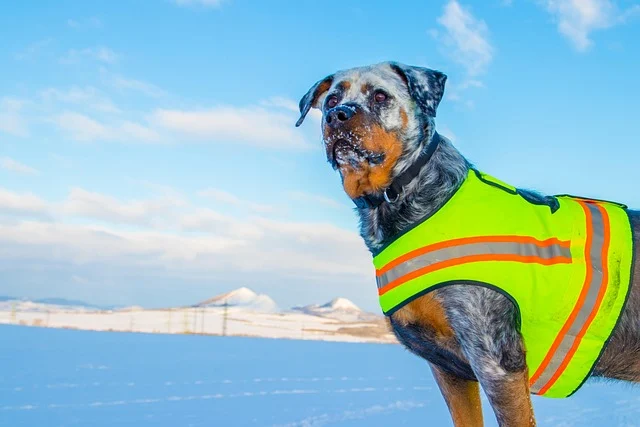
A well-fitting dog life vest is essential, regardless of how well your dog swims on land. Open-water swimming, cold water temperatures, tidal currents, and fatigue can quickly overwhelm even natural swimmers. A PFD provides buoyancy, insulation, and a critical handle for retrieval.
When selecting a PFD from established pet gear brands such as Ruffwear, Kurgo, or NRS, look for the following features:
- A sturdy, double-stitched grab handle along the back to safely lift your dog out of the water.
- A padded chest panel and front neck float flap to keep their chin and snout elevated above choppy water.
- Bright, high-visibility colours (orange, yellow, red) equipped with reflective trim for low-light visibility.
- Multiple adjustable chest and belly straps with quick-release buckles that do not pinch skin, allowing for a snug, secure fit.
Test the fit by lifting your dog by the handle; the PFD should not slide up past their ears.
Leashes, Tethers, and Safety Risks
A critical rule applies to dog kayaking. You must never tie your dog tightly to the kayak. Do not use a standard leash or rope. If the kayak flips over, your dog will be pinned underwater. The upside-down hull will trap it. Your dog could drown, even with a PFD.
Instead, allow your dog to sit untethered on the deck. However, they must wear a fitted PFD. If you choose to use a tether, do so in calm, wide rivers or lakes. Use a quick-release tether system. We specifically design this system for paddle sports. It attaches to the back harness ring of your dog’s PFD. It connects to a waist belt or deck line. This system has an instant quick-release pull toggle. It detaches under tension with one hand. This allows you to instantly free your dog in an emergency.
Deck Pads, Hydration, and First-Aid Kits
Pack fresh drinking water and a collapsible bowl; never let your dog drink salty seawater or stagnant lake water. Bring high-value, non-melting treats to reward calm behaviour. Always carry a waterproof canine first-aid kit containing vet wrap, bandages, antiseptic wipes, tick removal tools, styptic powder for torn nails, and tweezers for removing splinters or gravel from paw pads. Small dog booties can also protect paws on hot decks or rough terrain.
Training Your Dog for Kayaking: A Step-by-Step Approach
Building your dog’s confidence requires patience and gradual progression. Rushing straight into deep water will overwhelm your dog and trigger anxiety, potentially creating a lasting aversion to the kayak.
Phase 1: Dry-Land Familiarisation at Home
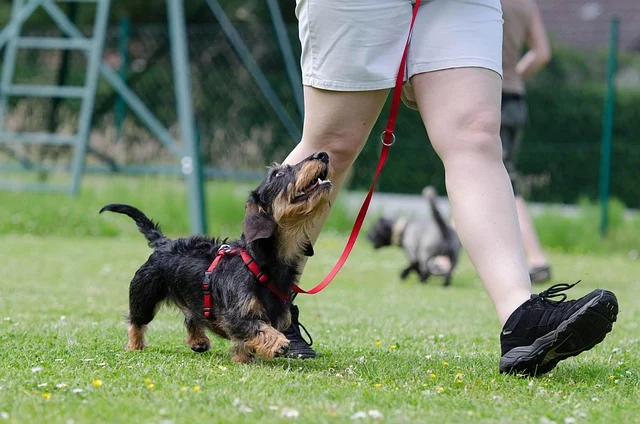
Place your kayak on the grass or living room floor. Block the sides with folded blankets so it does not tilt dramatically. Let your dog sniff and explore at their own pace. Scatter high-value treats on the deck floor. Encourage them to step onto the kayak voluntarily using a positive cue word like “board” or “boat”. Once they step up, reward them immediately. Practice cueing them to sit and lie down on the deck floor, holding the position for 30 to 60 seconds. Repeat this several times a day.
Phase 2: Introduction to Shallow, Calm Water
Move to a calm, shallow shoreline. Place the kayak in ankle-deep water while holding it steady. Invite your dog aboard using your established cue word. Feed treats while the boat sways gently. Step into your seat while keeping the boat grounded. Keep these early shore sessions short—about 5 to 10 minutes—ending on a high note.
Phase 3: Short Paddles in Sheltered Waters
Once comfortable in shallow water, push off into calm, slightly deeper water where you can still easily touch the bottom. Keep your first paddle trip very short, around 10 to 15 minutes. Focus entirely on keeping your dog calm and relaxed. Maintain a slow, smooth paddling rhythm with wide strokes to avoid splashing their face. Monitor your dog’s body language closely for signs of stress. If stressed, head straight back to shore and drop back to Phase 2. Never push them beyond their comfort level.
Phase 4: Building Endurance and Confidence
Gradually increase paddling time by 10 to 15 minutes each session as your dog grows accustomed to the motion. Practice landing on different shorelines, navigating minor boat wakes, and practicing calm waiting routines. Introduce new environments slowly, ensuring each experience is positive. Always end on a good note.
Deep-Water Re-boarding: What to Do When Your Dog Falls Overboard
Even well-trained dogs occasionally slip or jump overboard. Knowing how to haul a wet, heavy dog back onto your kayak without flipping yourself over is an essential skill. Practice this technique in a controlled environment before needing it in open water.
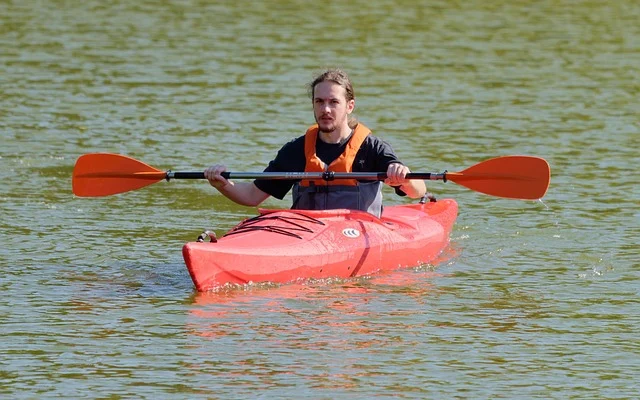
- Remain Calm and Stow Your Paddle: Stay calm and secure your paddle. Do not try to hold your paddle while pulling a heavy dog.
- Maintain Craft Balance: Position your dog alongside the side edge (gunwale) of your kayak, near your hips where the boat is widest and most stable. Never pull a dog aboard over the tip of the bow or stern.
- Grip the PFD Handle: Reach across your dog’s back with both hands and firmly grip the top handle of their life vest. Turn your body to face your dog while keeping your low center of gravity.
- Use the Push-and-Pull Technique: Push your dog gently down into the water for a second, then pull smoothly upward and toward your chest as they kick their back legs.
- Counterbalance Your Weight: As the dog’s torso slides over the side gunwale onto the deck floor, lean your head and upper body backward in the opposite direction.
- Settle the Dog Before Resuming: Once your dog is back on board, cue them to lie down centrally until they regain composure. Reward them before continuing.
Paddling Techniques, Weight Distribution, and Environmental Etiquette
Carrying living weight requires minor adjustments to standard paddling mechanics and a heightened sense of environmental awareness.
Trimming Your Kayak for Balance
How you position your dog changes the trim (horizontal balance) of your kayak and impacts its steering and speed:
- Small dogs (under 10 kg): Can sit comfortably between your legs or directly in front of your foot pegs without significantly affecting craft trim.
- Medium dogs (10 to 22 kg): Should sit in the forward cargo well facing forward or facing you. Experiment to find the sweet spot to prevent the bow from sinking.
- Large dogs (over 22 kg): Must sit as close to the center low point of the craft as possible. Tandem kayaks offer more flexibility for large dogs to find a central position.
Adjusting Stroke Mechanics
To avoid hitting your dog’s head or ears with low paddle shafts, adopt a slightly higher angle paddle stroke. Keep your forward strokes smooth and even, avoiding abrupt directional changes that force your dog to brace constantly or potentially lead to them shifting position or jumping out.
Environmental Stewardship and Wildlife Protection
Responsible pet paddling relies on respecting fragile marine ecosystems. You must also follow local regulations. Keep a respectful distance from wild animals. A barking or lunging dog causes severe stress to coastal wildlife. Adhere strictly to local access rules. Always pack out all pet waste in sealed bags. Dispose of it in trash receptacles on shore. Follow principles outlined by the Leave No Trace Centre for Outdoor Ethics. General water safety guidelines provide valuable advice. Organizations like the RNLI issue these guidelines. They help all paddlers sharing coastal and inland waters.
Common Mistakes to Avoid When Kayaking with a Dog
Avoid these frequent mistakes to keep your outings safe and trouble-free, ensuring a positive experience for both you and your dog:

Tying a Dog to the Boat with a Standard Leash
Tying your dog to a seat or bungee line using a fixed lead is extremely dangerous. If the kayak capsizes, the dog can be trapped and drown. Always use a fitted PFD with a top grab handle and keep your dog untethered unless using a quick-release harness system designed for paddle sports.
Ignoring Dark Deck Surface Temperatures
Dark polyethylene or black rubber deck pads absorb intense heat under direct sunlight. In hot weather, deck surfaces can heat up enough to burn sensitive paw pads. Always check deck surface temperatures with your bare hand, and splash water over the deck floor regularly to cool it down. Consider using a light-coloured mat or dog booties.
Overloading Total Weight Limits
Ignoring maximum weight ratings lowers your kayak deep into the waterline, dramatically reducing stability and making the boat prone to taking on water. Always calculate the combined weight of yourself, your dog, and all gear, staying well below the kayak’s stated capacity.
Rushing Training Without Land Preparation
Skipping dry-land practice and placing an untrained dog directly into moving water often results in panic, jumping overboard, or a flipped kayak. This can be traumatic for your dog and dangerous for you. Spend time practicing dry-land boarding and shallow-water drills before tackling longer paddles, building confidence gradually.
Forgetting Essential Hydration and Sun Protection
Dogs can quickly become dehydrated or suffer from heatstroke on the water. Always bring plenty of fresh water and a collapsible bowl. For brachycephalic breeds or those prone to overheating, consider paddling during cooler parts of the day or using a cooling vest. Some dogs may also benefit from dog-safe sunscreen on exposed skin.
Frequently Asked Questions About Dog Kayaks
Are dog kayaks a real thing, or just regular kayaks used for dogs?
While manufacturers rarely produce a standalone craft labeled exclusively as a ‘dog kayak’, the term refers to specific types of recreational kayaks adapted for pet use. This includes stable sit-on-top hard-shells, wide tandems, and heavy-duty drop-stitch inflatables. Adding non-slip EVA foam pads and selecting wide, flat-bottom hulls transforms standard recreational kayaks into excellent dog-friendly watercraft.
How do I choose the best kayak for my dog?
The best kayak for your dog depends on their size, your storage needs, and your paddling environment. Rotomolded plastic sit-on-tops or heavy-duty drop-stitch PVC inflatables provide the best resistance against claw scratches and offer high primary stability. For large breeds, a tandem kayak configured for solo use provides ample space.
Is kayaking safe for my dog?
Yes, kayaking is generally safe for dogs. However, you must take proper precautions. For example, use a properly fitted dog PFD. It needs a top grab handle. Also, practice gradual dry-land and shallow-water training. Do not tether your dog with a fixed lead. You should always paddle in calm waters. Make sure these waters suit your skill level. Keep your dog hydrated.
What safety equipment is essential for dog kayaking?
The most essential safety items are a high-visibility dog PFD with a top grab handle, fresh drinking water with a collapsible bowl, non-slip deck pads for traction, and a waterproof pet first-aid kit. Never use a fixed leash while underway, and consider a quick-release tether if you need to secure your dog.
How do I train my dog to get into a kayak?
Start on dry land by placing the kayak on grass, rewarding your dog with high-value treats whenever they explore or step onto the deck floor. Gradually move to ankle-deep water, continuing to reward calm behaviour, before attempting short, 10-minute paddles in calm, sheltered areas. Patience and positive reinforcement are key.
Can my large breed dog kayak?
Yes, large breed dogs can kayak safely if you choose a craft with sufficient deck space and payload capacity. Tandem sit-on-top kayaks configured for solo paddling or extra-wide solo sit-on-tops offer the stability and legroom needed for large dogs to sit or lie down comfortably without compromising the kayak’s balance.