True chimera cats are genuinely rare, and their unique genetic makeup can extend beyond visible fur patterns to include two distinct blood types. This article explores how chimera cats differ from calico or tortoiseshell cats, clarifies whether they are always female, discusses their typical health and behavioral traits, and explains why you cannot intentionally buy one.
What Exactly is a Chimera Cat?
A chimera cat is an individual feline composed of two genetically distinct sets of DNA. This results from the fusion of two separate embryos very early in the mother cat’s womb. This means the cat carries genetic material from what would have been two different individuals. It is essentially two cats in one body, each with its own unique DNA sequence maintained within different cell populations.
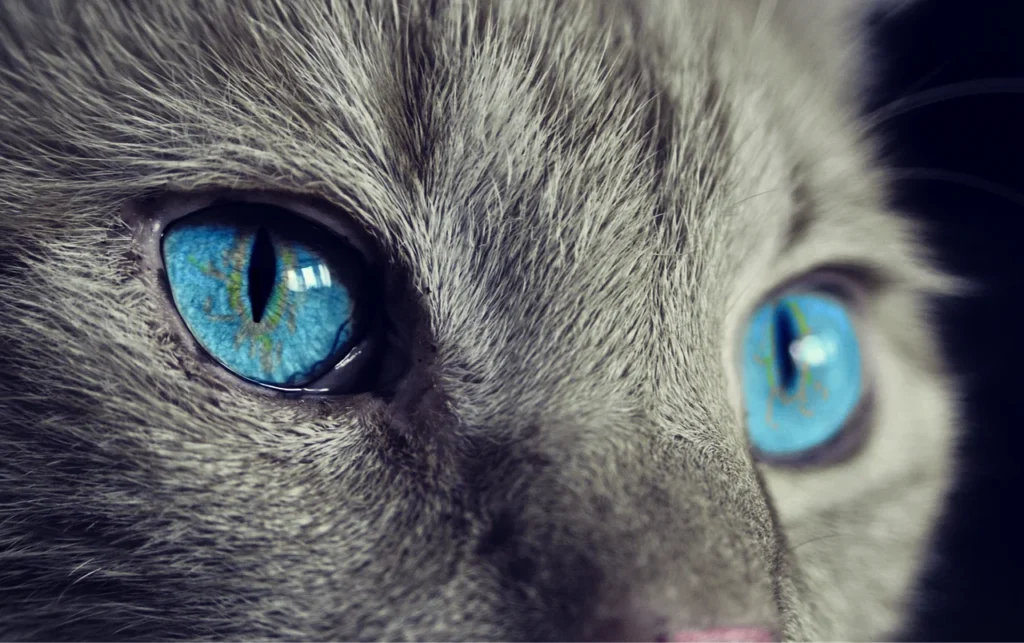
A chimera cat’s striking appearance is a result of having two distinct genetic makeups.
This fascinating phenomenon is a natural genetic occurrence, not a specific cat breed that can be intentionally bred. The term ‘chimera’ comes from Greek mythology, referring to a mythical beast composed of parts from different animals. In biology, it describes an organism containing cells from two or more different zygotes.
While the most famous examples, like Venus the Two-Faced Cat, often display a dramatic split-faced appearance, we must clarify that a split-colored face is not always definitive proof of chimerism. Mosaicism or X-chromosome inactivation can also cause such striking patterns, particularly in tortoiseshell and calico cats. However, if a cat truly is a chimera, it can possess two distinct blood types and different genetic makeups across various organ systems, not just in its fur.
How Do Chimera Cats Happen and What Causes Them?
Two separate fertilized eggs merge into a single embryo during the earliest stages of gestation to create a chimera cat. This process happens before implantation in the uterine wall. Normally, two fertilized eggs develop into fraternal twins. In the case of a chimera, the twin embryos collide and fuse together into one mass.
As the single combined embryo develops, cells from both original genetic lineages continue to divide and multiply. These cells migrate throughout the growing fetus. Consequently, the mature cat ends up with tissues derived from both starting embryos. One organ might consist predominantly of cells from the first embryo, while the skin or liver might feature a heavy concentration of cells from the second embryo.
Why Are Chimera Cats Split Down the Middle?
A sharply divided face or coat occurs because embryonic cells migrate in specific, symmetrical patterns during early development. As skin and pigment cells multiply, they spread outward from the neural crest along predictable paths across the body.
When two distinct cell populations from the fused embryos occupy different sides of the embryo early on, they push outward along those migration routes without blending completely. This creates a distinct dividing line, particularly on the face, where the left and right sides develop semi-independently. In other cases, the cell lines mix more thoroughly, resulting in mottled or patchy coloration rather than a clean split.
How Rare is a Chimera Cat?
Chimera cats are genuinely rare, with the occurrence of natural embryo fusion not reliably quantified among all cats. [revlox.com] This infrequency makes observing a true chimera cat a relatively uncommon event, especially one with the visible phenotypic traits often associated with the condition.
The rarity stems from the specific and precise timing required for two separate embryos to fuse successfully. This occurs in the early stages of gestation. It is a biological fluke, a remarkable accident of nature rather than a common genetic inheritance. While many cats might display interesting colour patterns, only a small fraction are true chimeras at a genetic level.
Are Chimera Cats Always Female? Understanding Gender and Genetics
No, chimera cats are not always female, although it’s a common misconception often linked to the genetics of coat colour. The genes responsible for orange and black fur are located on the X chromosome. Because female cats have two X chromosomes (XX) and males have one X and one Y chromosome (XY), female cats can express both orange and black colours through a process called X-chromosome inactivation.
However, when a male cat displays both orange and black fur, it’s a strong indicator that something unusual is at play. Most male tortoiseshell or calico cats are either chimeras or have an XXY chromosome configuration. We know this as Klinefelter syndrome. In the case of chimerism, if one of the fused embryos was genetically male (XY) and the other female (XX), the resulting chimera cat could be an XX/XY chimera. This means it carries both male and female cell lines. A 2026 study, for example, investigated the genetic characteristics of an XX/XY chimera through blood, hair follicles, and saliva samples. It confirmed that both genetic sexes can be present within one individual.
Therefore, while multi-coloured cats are predominantly female due to X-chromosome inactivation, chimerism itself can occur in either genetic sex. This happens if the fusing embryos had different chromosomal makeups.
Chimera Tabby Cat: How Tabby Patterns Fit In
You can also find chimera cats that feature tabby striping alongside multi-colored patches. A chimera tabby cat usually combines two distinct tabby patterns or merges a solid color with a tabby pattern.
This happens because the two fused embryos may have carried completely different coat patterns—such as a mackerel tabby genotype in one embryo and a solid black genotype in the other. As the cells grow, the physical expression of both patterns appears on the cat’s coat, creating a striking contrast between striped and solid fur sections.
Chimera Cat Versus Calico or Tortoiseshell: What’s the Difference?
You can easily confuse a chimera cat with a calico or tortoiseshell cat due to their striking multi-coloured coats. However, their genetic origins are fundamentally different. The key distinction lies in the number of genetic sources contributing to the cat’s makeup.
Calico and Tortoiseshell Cats: These cats are typically female and owe their varied coloring to a process called X-chromosome inactivation. In female cats, one of the two X chromosomes in each cell is randomly ‘switched off’ during development. Since the genes for orange and black fur are on the X chromosome, this random inactivation leads to patches of orange and black fur across the cat’s body. White patches in calico cats are due to a separate gene that inhibits pigment production, not related to X-chromosome inactivation directly.
Chimera Cats: As explained earlier, two entirely separate embryos fuse to form a chimera cat. This means the cat is made up of cells from two distinct genetic individuals. Each set of cells retains its original DNA. Chimeras can certainly have a calico or tortoiseshell appearance if one or both of the original embryos would have developed into such a cat. However, their unique genetic makeup stems from the fusion event, not solely from X-chromosome inactivation within a single genetic individual.
The practical implication is that a calico or tortoiseshell cat is a single genetic entity. It expresses different fur colours through normal genetic processes. However, a chimera cat is a genetic mosaic of two distinct individuals. This is why a male tortoiseshell is almost certainly a chimera or has Klinefelter syndrome. A typical male cat (XY) only has one X chromosome. Therefore, it cannot express both orange and black fur colours through X-chromosome inactivation alone.
Do Chimera Cats Have Special Health Needs or Behavioural Traits?
Generally, chimera cats have a similar lifespan and health profile to other cats. There are no specific health issues directly associated with their unique genetic makeup. The chimerism itself does not typically predispose them to particular illnesses or conditions.
Despite their unique genetic makeup, chimera cats typically lead healthy, normal lives.
You might think that having two different genetic lines suggests potential health complications. However, in cats, this usually isn’t the case. While human chimerism has been linked to immune system disorders and infertility in some instances, you do not commonly observe or report these specific associations in feline chimeras. Most chimera cats lead perfectly normal, healthy lives. They do not require any special veterinary care beyond what a typical cat would need.
Regarding behavioural traits, there is no scientific evidence to suggest that chimerism influences a cat’s personality or temperament. A chimera cat’s behaviour will be shaped by its breed (if applicable, though chimerism is not breed-specific), early socialization, environment, and individual personality, just like any other feline. The unique genetic composition visible in their fur does not translate into a split personality or any unusual behavioural patterns.
Where to Buy or Get a Chimera Cat (and Pricing Realities)
You cannot intentionally buy a chimera cat in the traditional sense, as chimerism is a natural genetic occurrence, not a breed that can be purposefully bred or selected for. Therefore, there is no established market or ‘price’ for a chimera cat.
If you encounter a cat with a striking appearance that resembles a chimera, it would be a serendipitous discovery. This discovery is likely through a rescue center, shelter, or a private breeder who happens to have such a unique animal. Any cat adopted or purchased through these avenues would typically have a standard adoption fee or purchase price associated with that particular organization or breeder, irrespective of its chimerism. The rarity of chimerism means that finding one ‘for sale’ is highly improbable. Any attempt to breed for chimerism would be unethical and impractical, as it’s a random event of embryonic fusion.
We advise against seeking out a cat specifically labelled as a ‘chimera’ for a high price. This could be misleading. Focus instead on finding a healthy cat with a good temperament from a reputable source, whether or not it displays unique genetic traits.
Frequently asked questions
What is a mosaic cat?
A mosaic cat is an individual whose body contains two or more genetically different cell lines. These originated from a single zygote. Unlike a chimera, where two separate embryos fuse, a mosaic arises from a mutation or genetic change. This occurs after fertilization within one developing embryo, leading to different cell populations within the same animal.
What causes a cat to have two different coloured eyes?
A cat having two different coloured eyes is a condition known as heterochromia. It is caused by varying levels of melanin pigment in the iris of each eye. You often see it in white cats or cats with white spotting, particularly those with the dominant white gene or the white spotting gene. Heterochromia is not an automatic sign of chimerism. It can occur in many cat breeds without any underlying genetic fusion.
Is chimerism exclusive to cats?
No, chimerism is not exclusive to cats. It is a natural genetic phenomenon that can occur in other animal species, including dogs, mice, monkeys, and even humans. Scientists have observed the underlying biological process of embryo fusion, or the presence of genetically distinct cell lines within one organism, across a wide range of the animal kingdom.
Sources