ristics-and-origins” class=”saap-section”>Breed Characteristics and Origins
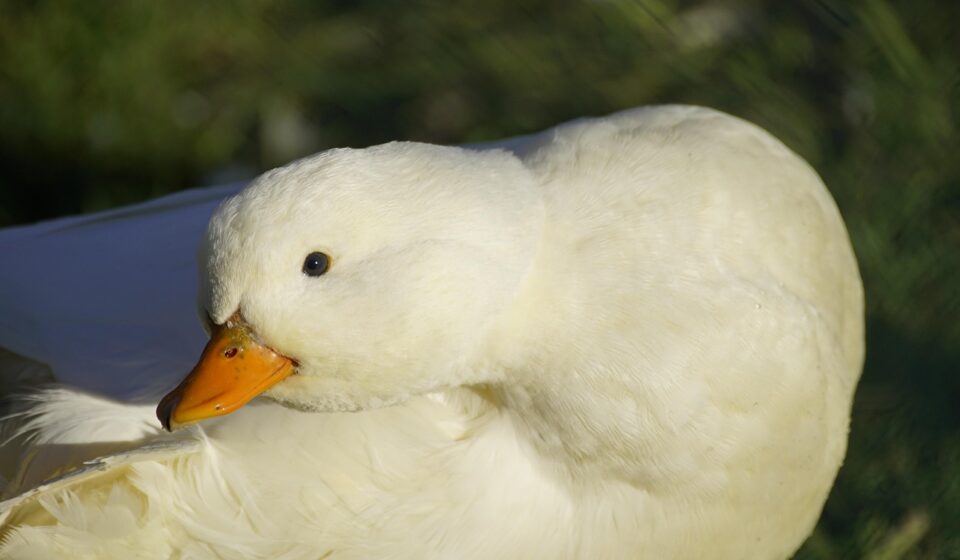
The American Pekin duck, officially recognised by the American Poultry Association in 1874, traces its lineage back to ducks brought from China to the United States in the mid-19th century. These birds are characterized by their pure white plumage, large, heavy bodies, and upright carriage. They possess bright orange bills and legs, and their eyes are typically a dark hazel. Adult males, known as drakes, weigh around 9 to 10 pounds (4-4.5 kg), while females, or ducks, are slightly lighter, typically weighing 8 to 9 pounds (3.6-4.1 kg). Their solid build makes them popular for meat production, but their amiable temperament also makes them desirable for hobby farms and even as pets. Unlike some wild waterfowl, Pekin ducks are not strong flyers due to their considerable weight. This characteristic makes containment easier for keepers, as they are less likely to fly over fences.

Temperament and Behavioural Traits
One of the most appealing aspects of the Pekin duck breed is its generally docile and placid temperament. They are known to be curious and friendly, often approaching humans with interest, especially if food is involved. This makes them a good choice for families and for those new to keeping waterfowl. While drakes can sometimes exhibit territorial behaviour, especially during mating season, Pekin ducks are typically not aggressive towards humans. However, Keep in mind that Pekin ducks can be quite vocal. They communicate through a range of quacks, from soft contented murmurs to loud, insistent calls. This can be particularly noticeable when they are excited, alarmed, or seeking attention. For those living in close proximity to neighbours, this vocalization is a significant consideration. Their behaviour is also strongly tied to their need for water; they are happiest when they have access to a pool or large tub where they can immerse themselves, preen, and play.
Egg-Laying Prowess
Pekin ducks are renowned for their exceptional egg-laying abilities. A healthy Pekin duck can produce a substantial number of large eggs throughout the year, often averaging 3 to 4 eggs per week during their peak laying season. These eggs are typically large, with a pale cream or off-white shell, and are prized for their rich flavor and versatility in cooking and baking. Their laying cycle often begins around 5 to 6 months of age. While they will continue to lay throughout the year, production may decrease during the winter months or when they undergo their annual moult. Providing a consistent diet, adequate daylight hours (around 14-16 hours), and a stress-free environment can help optimise their egg output. Unlike some other breeds, Pekin ducks are not typically broody; they are more inclined to lay and leave their eggs rather than sit on them to hatch.
Essential Housing and Space Considerations
Given their size, Pekin ducks require more space than smaller poultry breeds. A general guideline is to provide at least 10 to 15 square feet of outdoor space per duck, with additional indoor shelter space. This shelter should be dry, well-ventilated, and offer protection from extreme weather, predators, and drafts. In colder climates, ensuring the shelter is insulated and free from dampness is paramount to prevent frostbite on their combs and wattles. Access to water is non-negotiable for Pekin ducks. While they don’t require a large pond, a spacious water container such as a stock tank, large tub, or a small kiddie pool is essential. Pekin duck allows them to submerge their heads to clean their eyes and nostrils, keep their feathers in good condition through preening, and cool off during warmer weather. The water source should be easily accessible and cleaned regularly, as ducks tend to make their water quite messy.
Diet and Nutrition: Fuelling Your Pekins
The dietary needs of Pekin ducks evolve as they grow. Ducklings, from hatching to about 3-4 weeks of age, require a starter feed specifically formulated for waterfowl or game birds. This feed should have a protein content of approximately 20-22% and crucially, should NOT contain added medication (medication for chickens can be harmful to ducks). It’s important to ensure the feed is low in calcium, as excessive amounts can cause kidney problems in young ducks. As Pekin ducks mature, from 4 weeks to 16 weeks, they can transition to a grower feed with around 16-18% protein. Once they reach maturity (around 16-20 weeks), they can be moved to a layer feed, which typically contains 15-18% protein and a suitable calcium level for egg production. Supplementing their diet with fresh greens, vegetables, and occasional treats like mealworms or cooked grains can provide variety and essential nutrients. Always ensure fresh, clean water is available for drinking and for them to dunk their feed in, which aids digestion and prevents choking. According to the Veterinary Manual (Merck Veterinary Manual), waterfowl generally require a diet that’s balanced in protein, carbohydrates, fats, vitamins, and minerals. While specific recommendations for Pekin ducks are consistent with general waterfowl nutrition, ensuring their feed is specifically designed for aquatic birds or game birds is advisable to avoid nutritional deficiencies or excesses, especially regarding niacin, which is vital for leg and foot development in ducklings.
Health Concerns and Preventative Care
Pekin ducks are generally hardy birds, but like all animals, they are susceptible to certain health issues. Their large size and white plumage can make them more prone to frostbite on their combs and wattles during cold weather. Providing adequate shelter and ensuring they are not exposed to extreme cold without protection is vital. During hot weather, ensuring they have access to plenty of water and shade is equally important to prevent heatstroke. Common issues can include bumblefoot (an infection on the foot pad, often caused by rough surfaces or unsanitary conditions), internal parasites, and respiratory infections. Regular observation of flock behaviour, prompt cleaning of housing and water sources, and providing a nutritious diet are key preventative measures. If you notice signs of illness, such as lethargy, loss of appetite, discharge from eyes or nostrils, or lameness, consulting a veterinarian experienced with poultry or waterfowl is highly recommended. For instance, a sudden lameness in a duckling could indicate a niacin deficiency, highlighting the importance of correct starter feed.
Raising Pekin Ducklings: A Special Focus
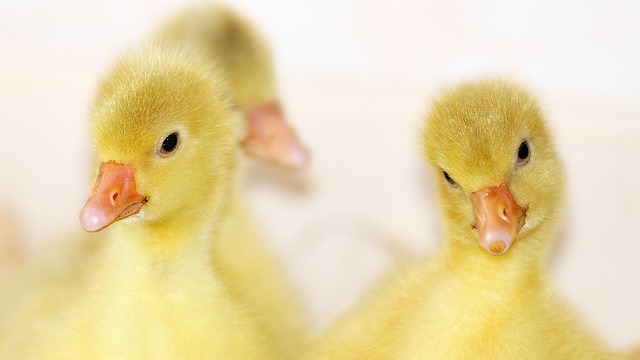
Caring for Pekin ducklings requires a slightly different approach than for chicks. From birth, they need a warm environment, typically maintained with a heat lamp set to around 90-95°F (32-35°C) for the first week, gradually decreasing the temperature by about 5°F (3°C) each week. They must have access to a suitable starter feed and, critically, shallow water for drinking and learning to dip their beaks. This water should be shallow enough that they can’t drown but deep enough to get their entire beak wet. A common mistake when raising ducklings is providing water that’s too deep, leading to drowning or chilling. Another pitfall is using chick starter feed that contains medicants harmful to ducks, or feed that’s too high in calcium. It’s also essential to ensure their brooding area is draft-free and kept meticulously clean to prevent disease. For example, a 2-week-old duckling, weighing about 10–12 ounces, will still require constant warmth and careful monitoring of its feed and water intake.
Suitability for Your Flock or Household
Pekin ducks are a versatile breed, but their suitability depends heavily on your circumstances. If you have ample outdoor space, a willingness to provide water access, and a tolerance for noise, they can be excellent additions. Their prolific egg-laying makes them valuable for those seeking a steady supply of large eggs. Their docile nature also means they can integrate well into a mixed flock of poultry, provided they are introduced gradually and safely, and have sufficient space to avoid conflict. However, they are not ideal for small urban backyards where noise might be an issue, or where space is very limited. Their substantial size means they consume more feed than smaller breeds, which can be a factor in feed costs. While they tolerate cold better than some breeds, they don’t possess the same level of hardiness against extreme winter conditions as some of the hardier, native breeds. Their need for water also means that providing a clean swimming area is a non-negotiable aspect of their care, which can involve more maintenance than simply providing a dry coop.
Frequently Asked Questions
What is the temperament of a Pekin duck?
Pekin ducks are known for their generally docile and friendly temperament. They are curious and often approach people, especially when food is involved, making them suitable for families and novice keepers. While generally not aggressive, drakes can be more assertive during mating seasons.
How much space do Pekin ducks need?
Due to their large size, Pekin ducks require ample space. It’s recommended to provide at least 10 to 15 square feet of outdoor space per duck, along with a dry, well-ventilated shelter. Access to a water source large enough for them to swim and preen is also essential.
Are Pekin ducks good egg layers?
Yes, Pekin ducks are excellent egg layers, often producing 3 to 4 large, cream-coloured eggs per week during their peak season. They begin lying around 5 to 6 months of age and are not typically broody, meaning they are more focused on laying than hatching eggs.
What do Pekin ducks eat?
Ducklings require a waterfowl starter feed (20-22% protein, unmedicated). Mature Pekin ducks thrive on a grower feed (16-18% protein) until maturity, then a layer feed. Supplement with greens and fresh water, ensuring they can dip their entire beak in water to eat.
What is the average lifespan of a Pekin duck?
With proper care, Pekin ducks can live for a considerable time. Their average lifespan is typically between 9 to 12 years, though some can live even longer under optimal conditions, including good nutrition, adequate shelter, and protection from predators and disease.
Are Pekin ducks noisy?
Pekin ducks can be quite vocal. They communicate through various quacks, which can range from soft contentment to loud, insistent calls when excited or alarmed. This vocal nature is an important consideration for those living in close-knit communities.
Embracing the Pekin Duck Lifestyle
The Pekin duck is a rewarding breed for those prepared to meet its specific needs. Their impressive size, prolific egg-laying, and generally amiable nature make them a popular and versatile choice for many. By understanding and providing adequate space, a balanced diet, consistent access to clean water, and appropriate shelter, you can ensure your Pekin ducks lead healthy, fulfilling lives, bringing a unique charm and productivity to your backyard flock or homestead. Information current as of July 2026; pricing and product details may change.
Related Articles
- Chiweenie: The Adorable Chihuahua-Dachshund Mix
- Taylor Swift's Cats: Meredith, Olivia, and Benjamin
- 20 Gallon Aquarium: Your Essential Beginner's Guide