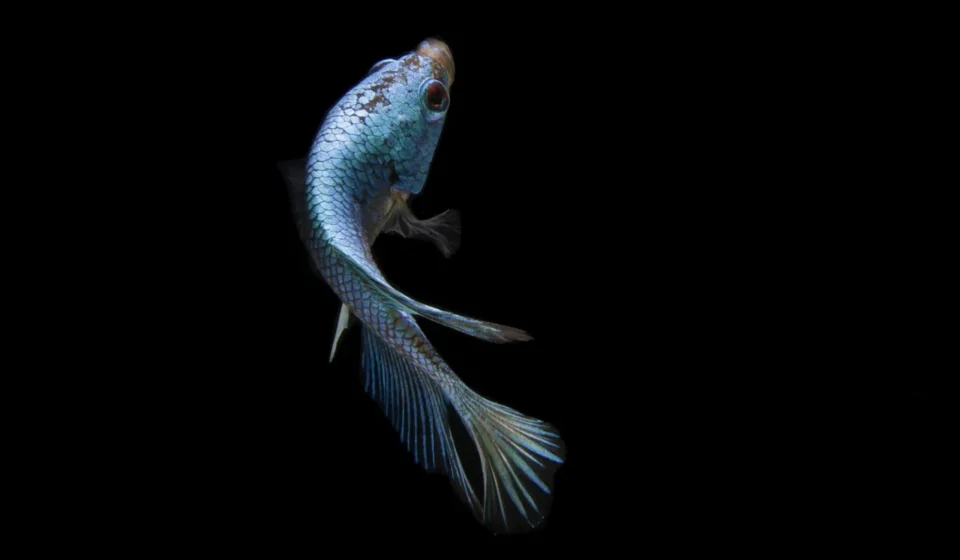
Betta fish (Betta splendens) are tropical freshwater fish that require a minimum 5-gallon heated and filtered tank maintained at 24–27°C (75–81°F), a protein-rich carnivorous diet, and nitrogen-cycled water to remain healthy. Known for their vibrant colors and distinct tail shapes, these territorial fish make interactive pets for beginner to intermediate aquarists.
While often mistakenly kept in unheated bowls, bettas need proper space and stable parameters to reach their 3 to 5-year lifespan. This guide covers step-by-step aquarium setup, nitrogen cycling, tail varieties, carnivorous feeding routines, and compatible tank mates.
Betta Fish: Complete Setup, Care, Diet, and Health Guide
Betta fish (Betta splendens) are tropical freshwater fish known for their vibrant colors, distinct tail shapes, and territorial nature. Keeping a betta healthy requires a minimum 5-gallon heated and filtered tank maintained at 24–27°C (75–81°F), a protein-rich carnivorous diet, and clean, nitrogen-cycled water.
Who is a betta fish suited for?
Betta fish are an ideal choice for beginner to intermediate aquarists who want a single, highly interactive aquatic pet in a desktop or small-room setup. Unlike schooling fish that require large aquariums, a single male betta thrives in a 5 to 10-gallon tank and often learns to recognize its owner, swimming to the front glass during feeding time.
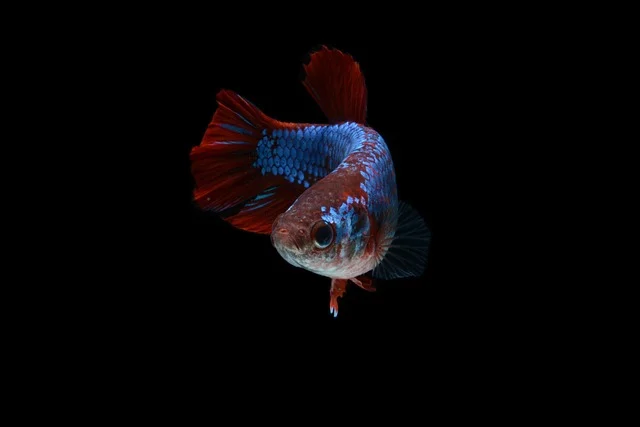
A betta fish is not suitable for anyone looking for a low-maintenance decoration in a tiny unheated bowl. Bettas require regular weekly water changes, daily feeding, filter upkeep, and constant water temperature monitoring. They are also not suitable for keepers who want a crowded community tank full of fast, bright fish, as bettas are territorial and prone to stress or fighting when kept with inappropriate tank mates.
Why do betta fish need more than a bowl?
The misconception that betta fish can live comfortably in small, unheated glass bowls stems from their wild origin. Native to shallow rice paddies, slow-draining marshes, and seasonal floodplains across Southeast Asia, bettas developed a specialized organ called a labyrinth organ. This organ allows them to gulp air directly from the surface when dissolved oxygen levels in shallow water drop during dry seasons.
While the labyrinth organ allows temporary survival in low-oxygen water, it does not make a small bowl safe or comfortable. In an unheated 1-gallon bowl, waste builds up rapidly into toxic ammonia, and water temperature fluctuates with the room’s air. Cold water slows a betta’s metabolism, weakens its immune system, and causes severe lethargy and fin decay.
A minimum tank volume of 5 gallons (19 liters) provides enough water to dilute waste, stabilize temperature, and house essential equipment. As a result, in a properly maintained 5-gallon setup, a betta fish can live 3 to 5 years, compared to only a few months in a typical bowl.
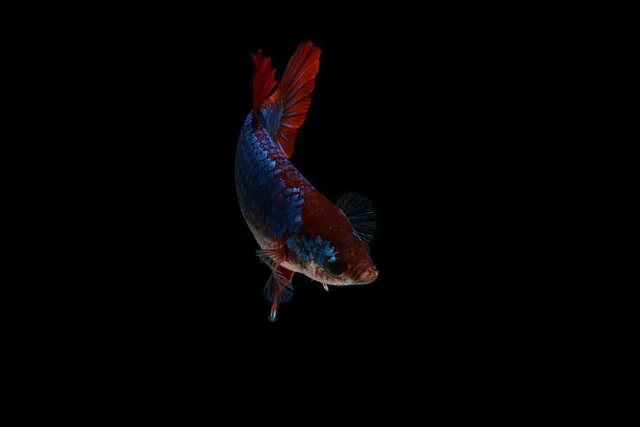
Comparing tank sizes for betta fish
The tank size you choose directly determines water parameter stability, maintenance frequency, and fish longevity.
| Feature | 1-Gallon Bowl | 5-Gallon Tank | 10-Gallon Tank |
|---|---|---|---|
| Water Stability | Poor (rapid ammonia spikes) | Good (stable parameters) | Excellent (highly resilient) |
| Filtration & Heating | Nearly impossible to fit | Fits small sponge filter & heater | Fits standard filter & heater options |
| Maintenance Frequency | 100% water change every 2–3 days | 25% water change weekly | 25% water change every 1–2 weeks |
| Tank Mate Compatibility | None | Snails or small shrimp only | Select small, peaceful community fish |
| Average Lifespan | 6–12 months | 3–5 years | 3–5+ years |
How to set up a betta fish tank step by step
Setting up your aquarium properly before bringing your betta home prevents unnecessary stress, shock, and illness. Follow these essential steps during setup:
- Select smooth substrate: Use fine gravel or smooth aquarium sand. Avoid coarse or sharp rocks, which easily scratch delicate belly scales and tear long fins.
- Choose soft plants and hiding spots: Use live aquatic plants like Anubias, Java Fern, or Hornwort. If selecting artificial plants, choose silk plants rather than plastic. Test plastic decorations with the pantyhose test: gently drag a pair of pantyhose across the decor, and if it snags the fabric, it will tear a betta’s fins.
- Install gentle filtration: Bettas are poor swimmers in strong currents due to heavy finnage. A low-flow sponge filter powered by an air pump or a hang-on-back filter with a baffle sponge over the output provides effective bio-filtration without creating turbulence.
- Add a reliable heater and thermometer: Install a 25W to 50W submersible heater set between 24–27°C (75–81°F). Place a separate glass thermometer on the far side of the tank to verify temperature stability.
- Treat tap water: Always add a quality liquid water conditioner to tap water before pouring it into the tank to neutralize chlorine, chloramines, and heavy metals.
How to cycle your tank before bringing your betta home
An aquarium is not biologically safe for fish until it undergoes the nitrogen cycle. Beneficial nitrifying bacteria must establish inside your filter media to break down highly toxic ammonia from fish waste into nitrite, and finally into far less harmful nitrate.
- Fill and run the equipment: Set up the tank with substrate, filter, and heater. Next, fill with dechlorinated water and run the system at 26°C.
- Add an ammonia source: Add a few drops of pure liquid ammonia or a daily pinch of fish food to simulate organic waste. This feeds the initial bacterial strain.
- Monitor water parameters daily: Use a liquid master test kit to check levels. Ammonia levels will spike first, followed by a surge in nitrites.
- Wait for bacterial conversion: After 2 to 4 weeks, ammonia and nitrite levels will drop to 0 parts per million (ppm), while nitrate levels begin to accumulate.
- Perform a baseline water change: Perform a 50% water change to reduce nitrates below 20 ppm before introducing your betta fish.
What are the common betta fish tail types and varieties?
Selective breeding has produced dozens of captive betta fish colors and tail configurations. Understanding your betta’s fin type helps you adjust water flow and decor choices appropriately.
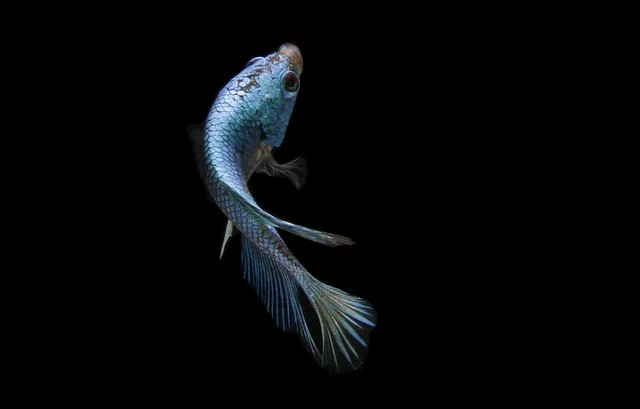
- Veiltail (VT): The most recognizable variety, featuring a long, flowing tail that droops downward naturally when resting.
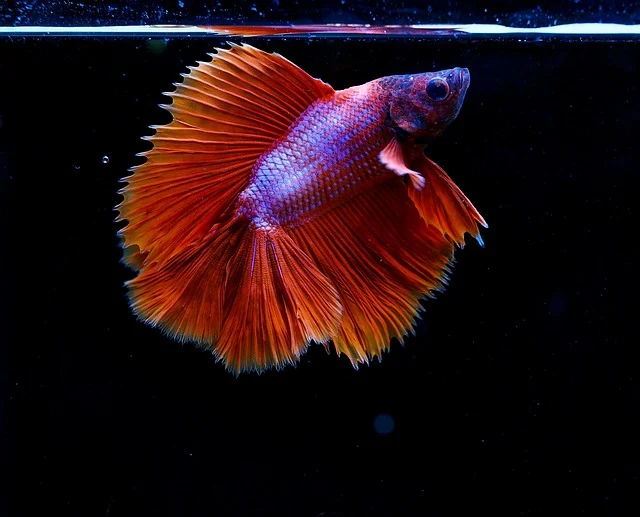
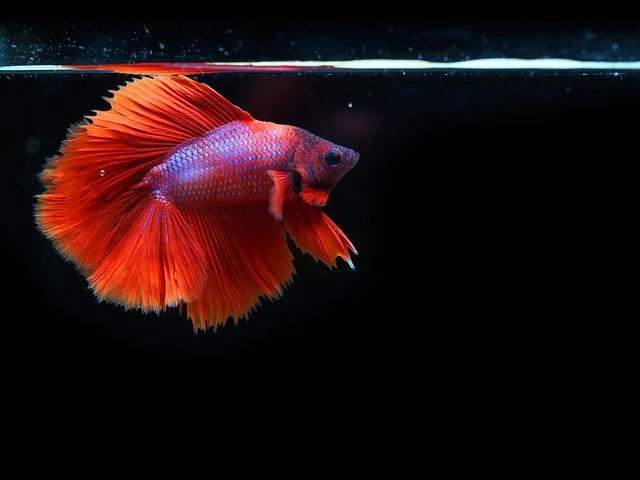
- Halfmoon (HM): Features a tail fin that opens to a full 180-degree fan when flaring. Their heavy fins make swimming exhausting, requiring low water current and frequent resting ledges near the surface.
- Crowntail (CT): Features fin rays extending far beyond the fin webbing, creating a distinct spiked fringe. Crown tips are delicate and particularly vulnerable to fin rot in poor water.
- Plakat (PK): A short-finned variety resembling wild bettas. Plakats are strong, agile swimmers, less susceptible to fin damage, and comfortable with moderate water flow.
- Elephant Ear / Dumbo: Features oversized pectoral fins that resemble large ears. They swim slowly and require smooth plants to protect their heavy pectoral membranes.
How should you feed your betta fish?
In the wild, betta fish feed near the surface on insect larvae, zooplankton, and tiny aquatic bugs. Because they are strict carnivores, plant-based flakes or general tropical fish foods cause bloating, constipation, and nutritional deficiencies.
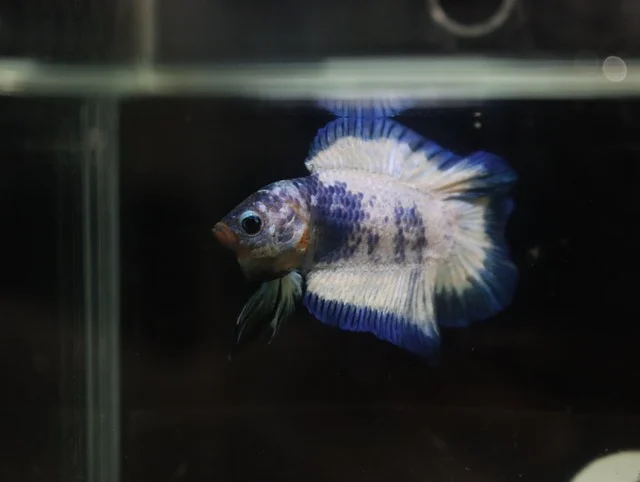
High-quality floating betta pellets should form the core diet. Select brands that list whole fish, shrimp, or krill meal as the primary ingredients, avoiding formulas dominated by wheat flour or soybean meal. Feed 2 to 3 pellets once or twice daily. Pre-soaking hard dry pellets in a small cup of tank water for 60 seconds before feeding softens them, preventing them from expanding inside the fish’s digestive tract.
Adding variety with treats
Offer protein-dense treats 1 to 2 times a week in place of a standard pellet meal to provide mental enrichment and extra nutrition:
- Frozen or live bloodworms: High in protein and highly stimulating for predatory feeding instincts.
- Brine shrimp: Excellent for enhancing natural red and orange fin pigmentation.
- Daphnia: Small water fleas rich in fiber that act as a natural digestive aid to prevent constipation.
Avoid overfeeding. A betta’s stomach is roughly the size of its eye. Uneaten food rapidly decomposes on the substrate, spoiling water quality, while overfed bettas face swim bladder issues and intestinal impaction.
Can betta fish live with other fish and tank mates?
Male bettas are territorial toward their own species and similar-looking fish. Housing two male bettas in the same aquarium results in violent fighting and fatal injuries. Male bettas will also attack male gouramis due to their shared body structure and territorial instincts.
Female bettas are less aggressive and can sometimes coexist in groups of five or more—known as a sorority—in aquariums of 20 gallons or larger. However, female sororities require advanced experience, heavy live plant cover, identical sizing, and constant monitoring to separate aggressive individuals immediately.
Safe tank mates for community aquariums
In a tank measuring 10 gallons or larger, a single betta fish can share space with peaceful, fast-moving species that inhabit different water levels. Introduce community tank mates before adding the betta so established territories are already set.
- Bottom dwellers: Corydoras catfish (such as Pygmy or Panda Corys) and Kuhli Loaches spend their time foraging on the substrate, remaining out of the betta’s sight line.
- Small peaceful schooling fish: Harlequin Rasboras, Ember Tetras, and Neon Tetras swim mid-water without nipping fins. Avoid Tiger Barbs, which nip, or Guppies, whose bright colors and long tails spark aggression.
- Invertebrates: Nerite Snails, Mystery Snails, and larger Amano Shrimp clear algae effectively. However, small species like Cherry Shrimp may be viewed by a betta as live prey.
How do you recognize and treat common betta fish illnesses?
Observing your betta fish daily allows you to catch early symptoms of distress. Water quality testing should always be your first diagnostic step when abnormal behavior appears.
Fin rot
Fin rot appears as frayed, blackened, or disintegrating fin edges, typically caused by bacterial or fungal growth in dirty water. Severe cases, however, require targeted antibacterial medication.
Ich (White spot disease)
Ich causes tiny white, salt-like specks on the scales and fins. Affected bettas rub themselves against tank decor to relieve itching. Treat by raising the water temperature gradually to 28–29°C over 24 hours to accelerate the parasite’s life cycle, while administering an aquarium salt bath or malachite green medication.
Swim bladder disorder
Bettas with swim bladder problems struggle to stay submerged, float sideways, or sink listlessly to the bottom, often accompanied by a bloated belly. First, fast the fish for 24 to 48 hours to resolve constipation. Follow fasting with a small piece of thawed, deshelled cooked green pea or frozen Daphnia to promote digestive motility.
Velvet disease
Velvet is caused by microscopic parasites that create a fine gold or rust-colored dust coating on the fish’s body. Symptoms include clamped fins, heavy breathing, and rubbing against plants. Treat by darkening the tank completely (turning off lights and wrapping with a cloth) and administering copper-based medication.
What routine maintenance does a betta aquarium require?
Consistent, low-stress maintenance keeps water chemistry stable without disrupting the beneficial bacteria colony inside your filter.
- Daily: Check water temperature (24–27°C), verify filter movement, feed measured portions, and observe your fish for signs of clamped fins or injury.
- Weekly: Perform a 20–25% water change using a gravel vacuum siphon to clean debris from the substrate. Test water for Ammonia (0 ppm), Nitrite (0 ppm), and Nitrate (below 20 ppm). Treat new water with dechlorinator before pouring it in.
- Monthly: Swish filter media gently in a bucket of drained aquarium water (never tap water) to remove built-up sludge without killing nitrifying bacteria. Also, trim dead leaves from live plants.
Sources: Siamese fighting fish, Betta Fish Care Sheet
Frequently asked questions
How big should a betta fish tank be?
A minimum tank size of 5 gallons (around 19 litres) is recommended for a single betta fish. Betta fish provides adequate swimming space, allows for stable water parameters, and supports a healthier environment compared to smaller bowls or tanks.
What should I feed my betta fish?
Feed your betta fish high-quality, protein-rich betta pellets as their staple diet, typically 2–3 pellets once or twice daily. Also, supplement sparingly with treats like bloodworms or brine shrimp a couple of times a week.
Can betta fish live with other fish?
While some bettas can coexist with peaceful tank mates in larger tanks (10 gallons+), it requires careful selection and observation. Male bettas should never be housed together, and aggression can still occur with other species or females.
What temperature should the water be for a betta fish?
The ideal water temperature for betta fish is between 24-27°C (75-81°F). A reliable submersible heater is essential to maintain this stable temperature consistently, as bettas are tropical fish.
How often should I change the water in a betta fish tank?
Ensure the new water is dechlorinated and matches the tank’s temperature to avoid shocking your betta fish.
What are signs of a sick betta fish?
Signs of a sick betta fish include lethargy, clamped fins, loss of appetite, hiding, unusual spots or discoloration, rapid breathing, or difficulty swimming. Promptly investigate and address poor water quality or other environmental factors.