The main distinction between the American Pit Bull Terrier and the Staffordshire Bull Terrier lies in their physical size and their legal status under UK law. The American Pit Bull Terrier is significantly taller and heavier, weighing between 15 and 27 kg, and is banned in the UK under Section 1 of the Dangerous Dogs Act 1991; conversely, the Staffordshire Bull Terrier is a smaller, fully legal, Kennel Club-registered breed weighing between 11 and 17 kg.
Beyond legal classifications, these two distinct breeds share a common ancestry originating from 19th-century British bull and terrier crosses. However, decades of selective breeding in different countries created two distinct dogs in size, physical proportions, and daily management needs. If you are trying to understand which breed is which, or navigating the legal landscape in the UK, understanding these specific structural and behavioral differences is essential.
American pitbull terrier vs staffordshire bull terrier: origins
Both breeds trace their lineage to early 19th-century Great Britain. Breeders crossed Old English Bulldogs with various terriers there. They created agile, tenacious dogs for baiting and pit sports. The Cruelty to Animals Act 1835 outlawed these sports. Dog owners then shifted focus toward show conformation and companion temperament. This led down two very different evolutionary paths for a pitbull vs staffordshire.
In Great Britain, breeders refined the smaller variant into what became the official Staffordshire Bull Terrier. The Kennel Club recognized the Staffy in 1935. Breeders deliberately bred it for a compact frame and a famously affectionate nature toward human family members. As a result, this earned it the longstanding nickname of the ‘nanny dog’.
Immigrants brought bull and terrier stock to the U.S. during the 19th century. American breeders selected for larger frames, longer limbs, and greater working capacity. This created the American Pit Bull Terrier (APBT). The United Kennel Club (UKC) recognized the APBT in 1898. The American Kennel Club (AKC) later registered the American Staffordshire Terrier (AmStaff). These distinct historical goals explain the divergence in body structures and international legal recognitions for pitbull vs staffordshire.
Physical comparison: height, weight, and proportions
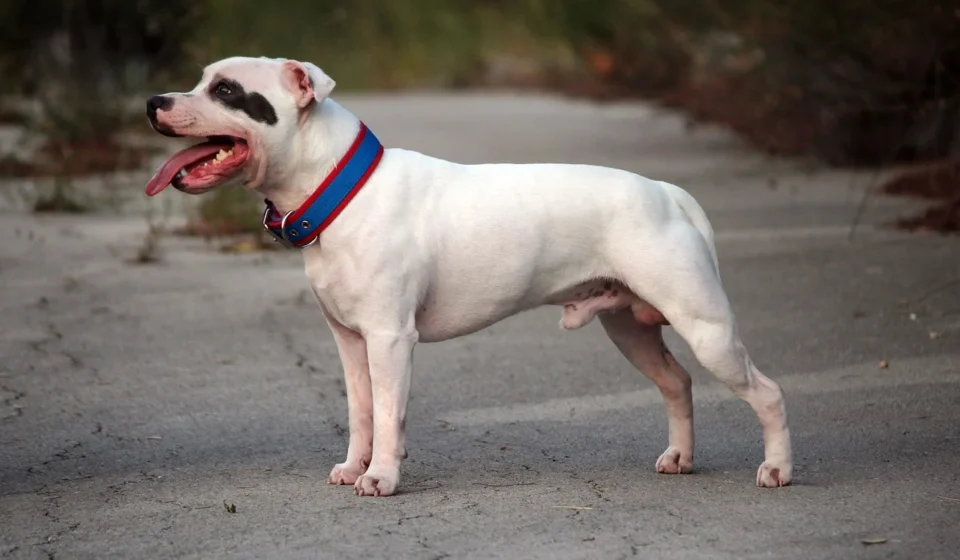
When you place them side by side, you instantly notice the physical differences in height, weight, and overall proportion between the American Pit Bull Terrier and the Staffordshire Bull Terrier. The American Pit Bull Terrier is a medium-to-large, lean, and athletic working dog. In contrast, the Staffordshire Bull Terrier is a small-to-medium, stocky, and low-slung companion dog.
The Kennel Club breed standard sets size for a Staffordshire Bull Terrier. Adults stand 36 to 41 cm (14 to 16 inches) at the shoulder. Males should weigh 13 to 17 kg (29 to 38 lbs). Females should weigh 11 to 15 kg (24 to 34 lbs). This differs from a pitbull vs staffordshire comparison in some aspects. Its head is short and deep. Also, it has broad cranial development. Distinct cheek muscles are present. A prominent stop and short muzzle also feature. The muzzle is one-third of the total head length.
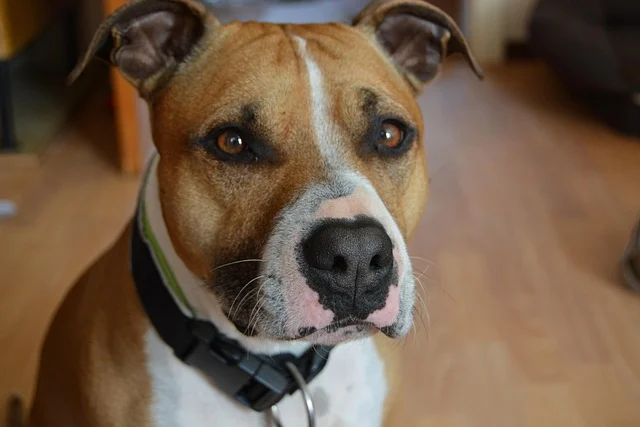
The United Kennel Club standard specifies a shoulder height of 45 to 53 cm (18 to 21 inches) for male American Pit Bull Terriers. Females are 43 to 50 cm (17 to 20 inches). Weight varies with height and build. It typically ranges from 15 to 27 kg (35 to 60 lbs). Some working lines can be larger. For example, the head, for a pitbull vs staffordshire, is wedge-shaped from above. Also, it has a longer muzzle, about half the head length. A lean, muscular neck leads to a deep chest and a higher center of gravity.
Key structural and breed differences
The following criteria outline the primary differences between the Staffordshire Bull Terrier and the American Pit Bull Terrier.
| Feature | Staffordshire Bull Terrier | American Pit Bull Terrier |
|---|---|---|
| Height at Shoulder | 36 – 41 cm (14 – 16 inches) | 43 – 53 cm (17 – 21 inches) |
| Adult Weight | 11 – 17 kg (24 – 38 lbs) | 15 – 27 kg (35 – 60 lbs) |
| Head Structure | Short, deep skull, heavy cheek muscles, short muzzle | Medium-length skull, wedge-shaped, muzzle roughly half head length |
| Body Build | Stocky, muscular, short-coupled, low center of gravity | Lean, muscular, athletic, higher center of gravity |
| UK Kennel Club Recognition | Fully recognized (Gundog/Terrier Group) | Not recognized |
| UK Legal Status | Legal to own, breed, and sell | Banned under Section 1, Dangerous Dogs Act 1991 |
Temperament, exercise, and living needs
In terms of temperament toward humans, both breeds are renowned for their intelligence, intense loyalty, and desire for close human interaction. Neither breed makes a naturally good guard dog for property. Their inherent affection for people generally overrides protective instincts unless you specifically train or mishandle them.
However, their exercise requirements and physical capabilities differ due to their size differences. An American Pit Bull Terrier requires substantial daily exercise; often, this means 90 to 120 minutes of vigorous physical activity. This includes endurance running, agility, or structured tug work to maintain mental health and prevent frustration. A Staffordshire Bull Terrier requires moderate daily activity, typically around 45 to 60 minutes of structured walking. You can pair this with interactive play and scent games.
Both breeds need socialisation. Owners must manage dog selectivity or aggression. This is crucial for potential owners. Both can live peacefully in multi-pet homes. Dedicated socialisation is key. Do not expect either to be naturally sociable. This applies to strange dogs in off-leash parks. We recommend structured leash walks. Secure garden spaces are also best. This applies regardless of if you have a Staffordshire or a Pitbull.
The UK legal landscape and the Dangerous Dogs Act 1991
In the United Kingdom, understanding the legal framework surrounding bull breeds is a fundamental safety and legal responsibility. Under Section 1 of the Dangerous Dogs Act 1991 (DDA), it is illegal to own, breed, sell, exchange, or advertise four specific types of dogs. This includes any dog ‘of the type known as the Pit Bull Terrier’. Later additions, such as the XL Bully ban introduced under the same framework, further restrict pit bull-type dogs. This legislation covers issues such as pitbull vs staffordshire.
Crucially, the DDA applies to physical ‘type’, not official pedigree. Dog Legislation Officers (DLOs) evaluate a dog using a physical standard. The Department for Environment, Food and Rural Affairs (DEFRA) issued this standard. If a dog substantially matches the DEFRA guide’s physical measurements and morphological characteristics—like tall height, long muzzle, deep chest, and high muscle mass—a magistrates’ court can seize it. It can be declared a pitbull vs staffordshire type, regardless of its parents’ registration.
The Staffordshire Bull Terrier itself is explicitly legal in the UK. However, crossbreeds or poorly bred, oversized ‘Staffies’ can sometimes fall into legal ambiguity. This happens if they lack pedigree papers and their measurements approach the DEFRA Pit Bull type description. If a court determines a dog is a Pit Bull type, the owner must apply for an Exemption Order through the Index of Exempted Dogs. Exemption requires proving the dog is not a danger to public safety. You must also have the dog neutered, microchipped, insured, and keep it muzzled and on a lead in all public places at all times.
How to safely identify and safeguard your dog in the UK
If you live in the UK and own or plan to acquire a Staffordshire Bull Terrier, take specific precautions. This protects both your pet and yourself from legal misidentification under the Dangerous Dogs Act.
-
- Obtain verifiable pedigree paperwork: Buy from reputable breeders registered with The Kennel Club. Formal registration documents and five-generation pedigree certificates provide clear evidence of your dog’s true heritage if questions ever arise.
- Keep your dog within standard physical bounds: Avoid purchasing advertised ‘giant Staffies’ or ‘bullpit crosses’. Because breeders offering oversized bull breeds often cross Staffordshire Bull Terriers with American Pit Bull Terriers or American Bulldogs. They produce offspring that easily meet DEFRA’s prohibited physical standard.
- Maintain mandatory compliance: Ensure your dog is microchipped with your current contact details and wearing a collar tag displaying your name and address in public spaces, as required under the Microchipping of Cats and Dogs Regulations and the Control of Dogs Order 1992.
- Invest in early socialisation and training: Well-mannered, quiet dogs on a lead rarely draw negative attention. Also, early obedience training prevents reactivity toward other animals, reducing any potential complaints from neighbors or authorities.
This advice is not suitable for individuals seeking an off-leash dog park companion or those unwilling to maintain strict management around other animals. Bull breeds require committed owners who prioritize safety, structure, and positive reinforcement training over trends or status symbols.
Related guides
Sources: Staffordshire Bull Terrier Dog Breed Information
Frequently asked questions
Is an American Pit Bull Terrier the same as a Staffordshire Bull Terrier?
No, they are distinct breeds with different origin histories, body sizes, and breed standards. The American Pit Bull Terrier is taller and heavier (15–27 kg), while the Staffordshire Bull Terrier is a smaller UK breed (11–17 kg) recognized by The Kennel Club.
Are Staffordshire Bull Terriers illegal in the UK?
No, Staffordshire Bull Terriers are completely legal to own, breed, and buy in the United Kingdom. However, oversized crosses that meet the physical description of a Pit Bull Terrier type under the Dangerous Dogs Act 1991 can face legal scrutiny.
What is the size difference between a Staffy and a Pit Bull?
A Staffordshire Bull Terrier stands 36 to 41 cm tall and weighs 11 to 17 kg. In contrast, an American Pit Bull Terrier stands 43 to 53 cm tall and weighs 15 to 27 kg, making the Pit Bull noticeably taller, longer, and heavier.
Can a Staffy cross be mistaken for a Pit Bull under UK law?
Yes, because the Dangerous Dogs Act assesses dogs based on physical appearance and measurements rather than DNA or breed papers. An oversized Staffordshire Bull Terrier cross with a longer muzzle and tall legs may meet the DEFRA physical standard for a prohibited pit bull type.