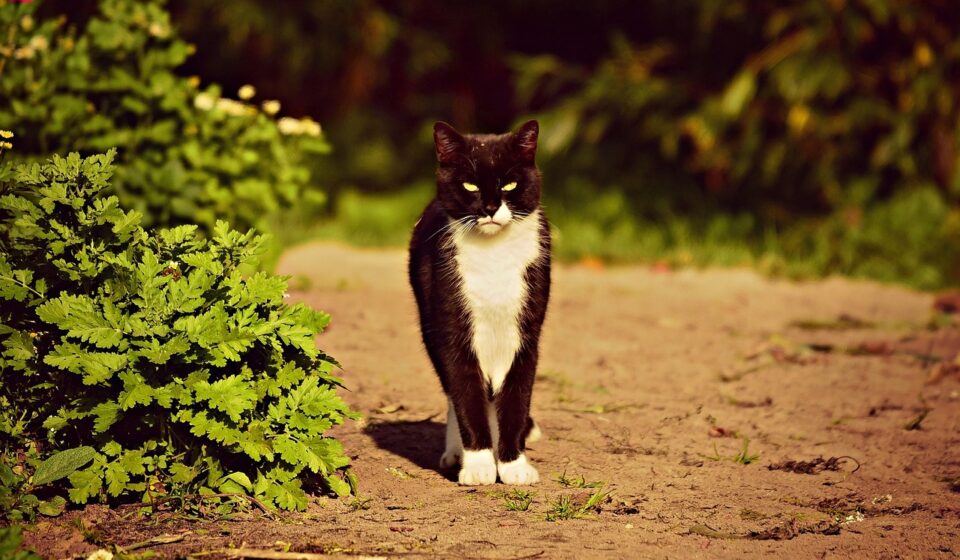
Cats with black and white fur, commonly known as bicolour or tuxedo cats, owe their contrasting appearance to the dominant white spotting gene. This genetic trait interferes with melanocyte distribution during embryonic development, creating coat patterns ranging from minimal white chest lockets to high-contrast masks and saddles across many domestic breeds.
The genetics behind black and white coat patterns
The striking contrast seen in black and white cats comes down to the expression of the piebald gene, officially designated as the white spotting gene (symbolized as S). Every cat inherits two alleles for coat pattern genes—one from each parent. The white spotting gene is a co-dominant mutation that alters how pigment-producing cells, called melanocytes, migrate across the skin while the kitten develops in the uterus.
During early embryonic development, melanocytes originate along the neural crest along the spine. As the fetus grows, these cells travel downward across the body toward the chest, belly, legs, and face. The white spotting gene slows down or halts this migration process. Areas where the melanocytes fail to reach before the skin finishes forming remain completely devoid of pigment. Consequently, the fur growing from these unpigmented skin patches emerges stark white, while areas reached by melanocytes produce rich black melanin pigment.
Geneticists categorize the extent of white fur using a 10-point white spotting scale:
- Low-grade white spotting (Grades 1 to 3): The cat remains predominantly black, possessing small patches of white fur restricted to the chest (a locket), throat, or toes (white socks).
- Medium-grade white spotting (Grades 4 to 5): The white fur covers roughly half of the cat’s body, creating classic patterns such as the tuxedo or mask-and-mantle variations.
- High-grade white spotting (Grades 6 to 9): White fur dominates the coat, with black pigment restricted to isolated patches across the back, head, and tail, as seen in harlequin and van patterns.
- Grade 10: The piebald gene suppresses pigment almost entirely, resulting in an nearly all-white cat carrying only tiny spots of black pigment behind the ears or along the tail.
A cat carrying two copies of the dominant white spotting gene (SS) typically exhibits high-grade white spotting. A cat with one dominant and one recessive allele (Ss) usually displays low to medium-grade white spotting, while a cat with two recessive alleles (ss) will show no white spotting at all, resulting in a solid coat.
Recognisable black and white coat patterns
While many people loosely refer to any black and white feline as a tuxedo cat, several distinct pattern terms exist within feline genetics and cat fancy associations. Recognizing these patterns helps owners identify specific physical traits in their pets.
Tuxedo pattern
The tuxedo pattern is perhaps the most famous medium-grade bicolour variation. A true tuxedo cat presents a solid black coat across its back, head, and tail, neatly paired with a bright white chest, white belly, and white paws. Many tuxedo cats also feature a symmetrical inverted white ‘V’ on their face, giving them the formal appearance of wearing a dinner jacket and dress shirt.
Harlequin pattern
Harlequin cats display a high-grade white background decorated with large, distinct, non-uniform black patches spread randomly across the body and torso. The white fur covers significantly more than half of the total coat, creating a bold, spotty appearance that varies widely from cat to cat.
Van pattern
Originating naturally in regional feline populations, the van pattern represents extreme high-grade white spotting. The body, limbs, chest, and belly are completely white. Black pigment is strictly confined to two specific regions: the top of the head between the ears, and the full length of the tail. A small spot of black near the shoulder or spine is occasionally permissible under breed standards.
Cap and saddle pattern
In the cap and saddle arrangement, white fur acts as the baseline coat. The black pigmentation appears in two primary locations: a solid patch over the crown of the head between the ears (the cap) and a large, rounded patch sitting across the lower back or hips (the saddle).
Mask and mantle pattern
This pattern features a continuous spread of black pigment covering the head around the eyes and ears (the mask) which connects down over the back and flanks like a cape (the mantle). The chin, throat, chest, abdomen, and all four legs remain clean white.
Locket pattern
The locket pattern sits at the lowest end of the white spotting scale. The cat appears entirely solid black except for a single, localized tuft of white fur resting on the throat or upper chest, resembling a pendant worn on a chain.
Popular breeds with black and white variations
Black and white fur is not restricted to a single breed. Because the white spotting gene is so prevalent across feline populations, bicolour markings appear in both domestic non-pedigree cats and recognized purebreds. Here are several breeds where black and white coats are frequently seen:
- Domestic Shorthair and Longhair: Non-pedigree domestic cats, often called doggies, represent the vast majority of black and white cats worldwide. Their genetic diversity leads to endless variations in pattern, body size, and eye colour.
- British Shorthair: Renowned for their dense, plush double coats and rounded features, bicolour British Shorthairs present crisp, clearly demarcated borders between solid black patches and pure white sections without any stray hairs mixing between colours.
- Maine Coon: These large, muscular cats look particularly striking with bicolour markings. Their long, water-resistant coats, heavy neck ruffs, and tufted paws highlight the sharp contrast between deep black fur and snowy white underbellies.
- Persian: Longhaired Persians display luxurious bicolour coats. Their flat facial structure requires diligent facial cleaning, as tear staining shows up prominently against white facial fur.
- Cornish Rex and Devon Rex: These slender, wave-coated breeds show off bicolour markings in tight, soft curls close to the skin, emphasizing the distinct line where pigmented skin meets non-pigmented skin.
Does coat colour influence a cat’s personality?
I frequently hear cat owners claim that tuxedo cats or bicolour cats possess distinct personality traits, such as being unusually vocal, feisty, or affectionate. It is easy to see why these beliefs persist; the formal appearance of a tuxedo pattern makes it tempting to attribute human personality traits to feline coat markings.
However, scientific research into feline genetics demonstrates that coat colour genes do not influence neurological development or behavioral traits. A cat’s personality is shaped by three primary factors: inherited temperament from its mother and father, environmental enrichment, and the quality of human socialisation experienced between three and nine weeks of age.
When owners report that their tuxedo cat is particularly playful or demanding, they are observing individual behavioral traits rather than a rule tied to coat colour. I recommend choosing or evaluating a cat based on its documented behaviour, handling response, and socialisation history rather than relying on coat pattern stereotypes.
Health care priorities for black and white cats
While the white spotting gene creates visually appealing coat patterns, it introduces specific health considerations that owners must actively manage. Understanding these risks ensures your cat stays healthy throughout its life.
Sun exposure and squamous cell carcinoma
The white fur on a cat’s ears, eyelids, nose bridge, and lips grows over unpigmented, pink skin. Unlike dark skin beneath black fur, pink skin lacks protective melanin, making it vulnerable to ultraviolet (UV) radiation from sunlight.
Prolonged exposure to sun rays can trigger solar dermatitis (actinic dermatitis), characterized by reddened skin, hair loss, flaking, and crusty scabs along the edges of the ears or nose. If solar damage recurs repeatedly without protection, affected skin cells can mutate into squamous cell carcinoma, a malignant and aggressive form of skin cancer requiring surgical resection.
To protect cats with white facial or ear markings, I advise implementing these preventive measures:
- Keep cats indoors during peak daylight hours between 11:00 and 15:00 when solar UV intensity reaches its highest levels.
- Apply specialized, pet-safe sunscreen to white ear tips and nose bridges before outdoor access. Never use human sunscreen, as ingredients like zinc oxide and titanium dioxide are toxic to cats when ingested during grooming.
- Install UV-blocking film on sunny windows where your cat likes to bask indoors.
Congenital deafness risks in high-grade white coats
The white spotting gene can affect auditory health when present in high grades. During embryonic growth, the same stem cells that produce pigment cells also contribute to the development of the stria vascularis inside the inner ear, which supplies electrical potential to the auditory organ.
If melanocytes fail to reach the inner ear during development, the auditory hair cells degenerate, causing permanent sensorineural deafness. While this condition is most prevalent in solid white cats with blue eyes, high-grade bicolour cats (such as Van or Harlequin patterns) with extensive white head fur and blue eyes also carry an elevated risk of unilateral (one ear) or bilateral (both ears) deafness.
If you suspect your high-grade bicolour cat has impaired hearing, test their response to unexpected non-vibrational sounds (like tapping two wooden spoons together behind their back). A veterinary surgeon can perform a definitive Brainstem Auditory Evoked Response (BAER) test to measure electrical activity in the auditory pathway.
Grooming and maintaining contrast in bicolour coats
Keeping a black and white cat looking well-groomed requires attention to both dark and light fur patches, as each presents distinct care requirements.
Preventing white fur discolouration
White fur collects visible dirt, natural skin oils, and tear stains much faster than black fur. To maintain bright, clean fur without causing skin irritation:
- Use a soft, damp microfiber cloth or fragrance-free cat wipes to gently clean the chin, paws, and under-tail area after meals or outdoor activity.
- Avoid commercial whitening shampoos formulated with harsh blueing agents or artificial fragrances, which strip natural protective oils from the feline skin barrier.
- Clean face folds daily on short-muzzled breeds like Persians to prevent tear fluid oxidation from turning white cheek fur reddish-brown. Feline facial hygiene and communication cues are further explored.
Brushing and skin inspection protocols
Regular brushing removes dead hair from both the dark and light sections of the coat, reducing hairballs and preventing mats. Use a fine-toothed slicker brush twice a week for shorthaired bicolour cats, and daily for longhaired varieties.
During grooming sessions, part the fur to inspect the skin underneath. Look closely at the transition zone where dark-pigmented skin meets pink skin. Check for redness, dry flaking, crustiness, or new dark spots on pink skin areas. Any non-pigmented skin showing persistent scaliness or ulceration should be evaluated promptly by a qualified vet.
Related guides
Sources: Black cat
Frequently asked questions
What is the official name for a black and white cat?
The correct genetic term for a cat with black and white fur is a bicolour or piebald cat. Specific markings are described using terms like tuxedo, harlequin, van, cap and saddle, or locket depending on how white fur is distributed across the body.
Is a tuxedo cat a distinct breed?
No, tuxedo is a coat pattern defined by a black body with a white chest, belly, and paws, not a standalone breed. This distinct pattern appears across mixed-breed domestic cats as well as pedigree breeds like the Maine Coon, British Shorthair, and Persian.
Do black and white cats live as long as other cats?
Yes, coat pattern has no direct effect on a cat’s inherent lifespan. A black and white cat can live a long life when provided with proper nutrition, indoor shelter, routine veterinary check-ups, and targeted sun protection for unpigmented skin.
Why do some black and white cats have pink skin on their nose and ears?
Pink skin occurs on areas where the white spotting gene prevented melanocytes (pigment-producing cells) from reaching the skin surface during early embryonic development. Skin under white fur remains unpigmented and pink, while skin under black fur produces dark melanin.